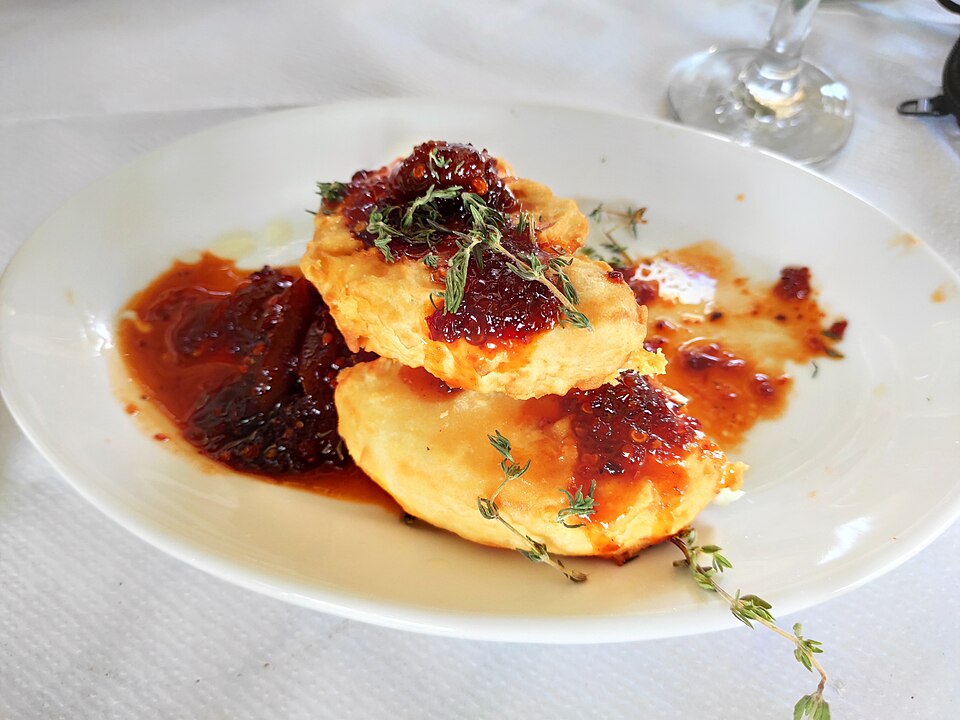
A suitable firm cheese softens while retaining shape, and a light flour film becomes golden. Lemon supplies the sharp finish. There is no need for alcohol or a tableside flame to make this version interesting.
Golden Pan-Fried Saganaki
Planning totals add preparation, cooking and listed waits. Overlapping stages may shorten the schedule; ingredient and equipment differences can lengthen it.
Ingredients
Times and base yield refer to the original recipe. Scaling quantities does not automatically change pan size, temperature or cooking time.
Step-by-step method
The steps describe the base batch (4 servings). The calculator changes the ingredient list only; amounts written in the steps, equipment and timing remain for that base batch.
Step 1
Cut cheese into two or four slabs about 1.5 cm thick.
Step 2
Moisten the surface briefly with water and coat lightly in flour.
Step 3
Shake off excess flour so no thick dry patches remain.
Step 4
Heat olive oil in a heavy skillet over medium-high heat.
Step 5
Fry cheese for 1–2 minutes on each side until golden and softened without fully melting away.
Step 6
Serve immediately with lemon wedges and a little black pepper.
Why this version works
Choose a cheese that can tolerate the pan
Kefalograviera or graviera are useful starting choices when available, and a shop may also sell cheese specifically labeled for frying. The key is a firm structure that softens without immediately spreading into liquid. Ordinary soft feta behaves differently and should not be substituted while promising the same crust and center. Taste the cheese first because its salt level can be strong. The listed 300 grams make a shared starter, not a reason to add extra salt automatically. Keep the block cold until cutting so it is easier to make even slabs.
Cut thickness for a warm center and intact shape
Slabs around one and a half centimeters thick give the surface enough time to color while the center warms and softens. Thin slivers can melt or become leathery before a useful crust develops, while a very thick block may stay cold inside. Cut into two or four manageable pieces rather than trying to turn an oversized slab that fills the whole skillet. Dry any loose brine, then moisten the surface briefly as directed so flour adheres in a thin coat. A dripping-wet cheese surface creates a gluey layer and can splutter when it meets oil.
Coat lightly and control the first minute
Use plain flour in a shallow dish, press the damp cheese into it and shake off loose white patches. The coating should be almost translucent once oiled, not a thick bread-like casing. Heat olive oil in a heavy skillet until ready for a steady sizzle, then lower the cheese gently away from your body. Give the first side time to form a crust before turning with a broad spatula. If the cheese spreads rapidly, remove it from the heat and reassess the variety and temperature. More flour cannot turn an unsuitable melting cheese into a firm frying cheese.
Serve as soon as the contrast is ready
The second side needs only a short cook once the slab is warm. Look for a golden surface and softened center without waiting for the entire cheese to become runny. Transfer to a warm plate, add lemon at the table or in a measured small squeeze and serve immediately. A long warm hold makes the cheese firmer and the crust less distinct. This preparation is cheese saganaki; the word saganaki also appears in other Greek small-pan dishes, so it should not be treated as a claim that all foods using the name are fried cheese. Keep the presentation simple and practical.
Choose a cheese portion that can be turned intact
The written cheese allowance makes a shared starter, so decide how many slabs the pan can hold before flouring them. Similar thickness matters more than identical outline: a narrow thick piece and a broad thin piece do not warm in the same way. Coat only the surfaces that need a light flour film and shake off visible piles at the edges. Prepare lemon wedges and plates before the cheese enters the pan. Waiting in a covered stack changes the crisp surface, while reheating repeatedly can move the cheese beyond its intended softened but intact stage.
Ingredient choices and substitutions
Choose kefalograviera, graviera or a cheese specifically suitable for frying. Ordinary soft feta may break down and does not behave the same way. Taste the cheese before adding any salt, which is usually unnecessary.
Fixes for this recipe
| What you notice | Likely reason | What to do |
|---|---|---|
| Cheese spreads into an oily puddle. | The chosen variety is too soft or the pan did not form a crust quickly. | Use a suitable firm frying cheese next time and preheat properly. Serve the current melted cheese as a different preparation rather than claiming the original slab texture can be restored. |
| A pale flour paste coats the surface. | The cheese was too wet or carried excess flour. | Moisten briefly, shake off flour thoroughly and use enough heat for a steady sizzle. A thick coating should not be used as insurance against melting. |
| The exterior is dark but the center is cold. | The slab is too thick or heat is too intense. | Cut more evenly and use moderate-high rather than uncontrolled heat. Briefly gentler cooking can warm the center without blackening the crust further. |
Recipe-specific questions
Can halloumi be used?
It can make a firm grilled or fried cheese dish, but its texture and flavor differ from the cheeses named here. Describe it as an accessible variation rather than promising an identical Greek saganaki result.
Does the cheese need an egg-and-breadcrumb coating?
Not for this version. A light flour layer forms the intended thin crust. A full breading creates a different thicker shell and changes frying behavior and eating texture.
Is flambéing part of the required method?
No. This recipe uses no alcohol and no tableside flame. Pan browning, a suitable cheese and lemon provide the main contrast without that additional presentation step.
Serving and storage
Tomatoes, bread and a few crisp vegetables balance the salty richness. Add lemon gradually and keep other brined cheeses or very salty sauces modest on the same small plate.
Prepare only what can be eaten promptly for the best texture. Refrigerate any cooled leftovers safely, but expect reheated cheese to be firmer and less delicate. A fresh short pan cook is more useful than repeatedly warming a finished slab under intense heat.
An AI-assisted editorial guide, not independently kitchen-tested. The photograph is a serving example. How we prepare and correct our guides.
For safe handling, consult FDA guidance. Send recipe corrections by email to ZYS10.