It should not require a large volume of gravy. Giving potato a head start and keeping cauliflower dry address the two most common home-kitchen problems before they begin.
Golden Aloo Gobi
Planning totals add preparation, cooking and listed waits. Overlapping stages may shorten the schedule; ingredient and equipment differences can lengthen it.
Ingredients
Times and base yield refer to the original recipe. Scaling quantities does not automatically change pan size, temperature or cooking time.
Step-by-step method
The steps describe the base batch (4 servings). The calculator changes the ingredient list only; amounts written in the steps, equipment and timing remain for that base batch.
Step 1
Dry cauliflower well and cut potatoes into small even cubes.
Step 2
Heat oil, toast cumin briefly and cook onion until lightly golden.
Step 3
Add ginger, turmeric, coriander and chile with a splash of water, then stir in tomatoes.
Step 4
Cook until the tomato mixture thickens, then add potatoes and 80 ml water.
Step 5
Cover and cook for 10 minutes, add cauliflower and continue gently until both vegetables are tender.
Step 6
Uncover to evaporate excess moisture, season to taste and finish with fresh coriander.
Why this version works
Cut for different cooking speeds
The 400 grams of potatoes and 500 grams of cauliflower should not be cut into equally bulky pieces. Potato cubes about 1.5 centimetres across soften more predictably than large chunks, while cauliflower can remain in slightly larger bite-size florets. Split thick stems lengthwise so they do not remain hard after the tops soften. Wash cauliflower ahead and drain thoroughly in a colander. Water caught between the branches enters the pan even when the exterior appears dry. Prepare both vegetables before starting the cumin, because the aromatic base should not wait on high heat while you finish chopping.
Give the potato a controlled head start
The initial 80 millilitres of water is a small steaming allowance, not enough for a soup. Once the tomato base is concentrated, stir the potatoes through it, add the water and cover. Check a piece after the first ten minutes: it should have begun to yield but need further cooking. If still completely hard, allow more covered time before adding cauliflower. If the pot is dry, add another spoonful of hot water. A heavy 26-centimetre sauté pan offers space and predictable evaporation; a deep narrow pot traps more moisture around the vegetables.
Bloom spices without blackening the base
Cumin seeds need only a short sizzle before onion enters. Turmeric, ground coriander and chile have smaller particles that can scorch more quickly, so use the splash of water specified when adding them. Tomatoes then introduce enough liquid for a slower cooking stage. Let them thicken before adding the potato or the finished vegetables may sit in a raw-tasting watery sauce. The ground spices should smell warm and distinct rather than smoky or acrid. If a blackened layer forms, do not scrape it through the whole dish; move the unburnt ingredients to a clean pan.
Finish dry, but do not confuse dry with scorched
After cauliflower enters, use enough covered time to cook it, then uncover so excess liquid evaporates. Fold gently from underneath rather than repeatedly crushing the florets with a spoon. A little oil on the surfaces is normal, but the vegetables need not be visibly greasy. If adapting with roasted cauliflower, roast it separately until almost tender and fold it in late; that creates a different browned flavor and reduces the covered cooking required. Fresh coriander belongs at the end. Lemon can be offered separately if the tomatoes already give sufficient brightness.
Choose the moment when the lid should come off
Covered cooking helps the potatoes and cauliflower soften, while the uncovered stage removes excess moisture. Check a potato center and the thick part of a cauliflower stalk before changing stages; a browned edge does not prove either is ready. If the potatoes are still firm, keep a little moisture available and continue gently instead of drying the pan aggressively. Once both vegetables are tender, uncover and fold carefully. A shallow dry coating is the target, not repeatedly scraping pieces until they break into a spiced mash.
Ingredient choices and substitutions
Choose a firm cauliflower with tightly packed florets and potatoes that hold their shape. Small even pieces make timing more predictable. Fresh ginger should be juicy rather than fibrous and shriveled.
Fixes for this recipe
| What you notice | Likely reason | What to do |
|---|---|---|
| Soft cauliflower with hard potato cubes | The potatoes were too large or had insufficient cooking before cauliflower was added. | Remove intact cauliflower pieces if practical, add a splash of water and finish the potatoes covered. Cut smaller potato cubes or extend their head start in the next batch. |
| Vegetables float in a thin orange liquid | Wet cauliflower entered a covered pan or the tomato base was still loose. | Uncover and evaporate gently, moving the vegetables only enough to prevent catching. Do not add flour; the intended texture comes from controlling water rather than making a thick sauce. |
| Broken florets with a burnt spice smell | The pan dried over strong heat and stirring became forceful to release stuck pieces. | Lower the heat, add a small splash of water at the edge and fold with a broad spatula. Avoid mixing blackened deposits into the food. |
Recipe-specific questions
Can frozen cauliflower be used for aloo gobi?
Yes, but it releases more water and softens quickly. Add it after the potato is close to tender and cook uncovered sooner. Roasting the frozen florets separately is another adaptation, provided they are folded in without extending the original covered cooking.
Should I parboil potatoes before making this version?
It is unnecessary for small cubes given a proper head start. If using large chunks, partial boiling can improve timing, but drain and steam-dry them well. Reduce the water added to the pan so the dish does not become wet.
Can I omit the onion without changing anything else?
Onion adds sweetness and some bulk to the base. It can be omitted for a variation, but the tomatoes and spices then become more prominent. Watch the smaller aromatic base closely and add water sparingly to prevent scorching.
Serving and storage
Chapati or roti suits the dry coating, while plain yogurt offers cool contrast. If serving with rice, add a spoonable dal alongside rather than trying to turn the aloo gobi itself into a wet curry.
Refrigerate cooled portions in shallow containers. Reheat in a wide pan with a spoonful of water and a lid briefly, then uncover to restore the relatively dry finish. A microwave is convenient but may soften cauliflower further; stir gently and stop once the vegetables are thoroughly hot.
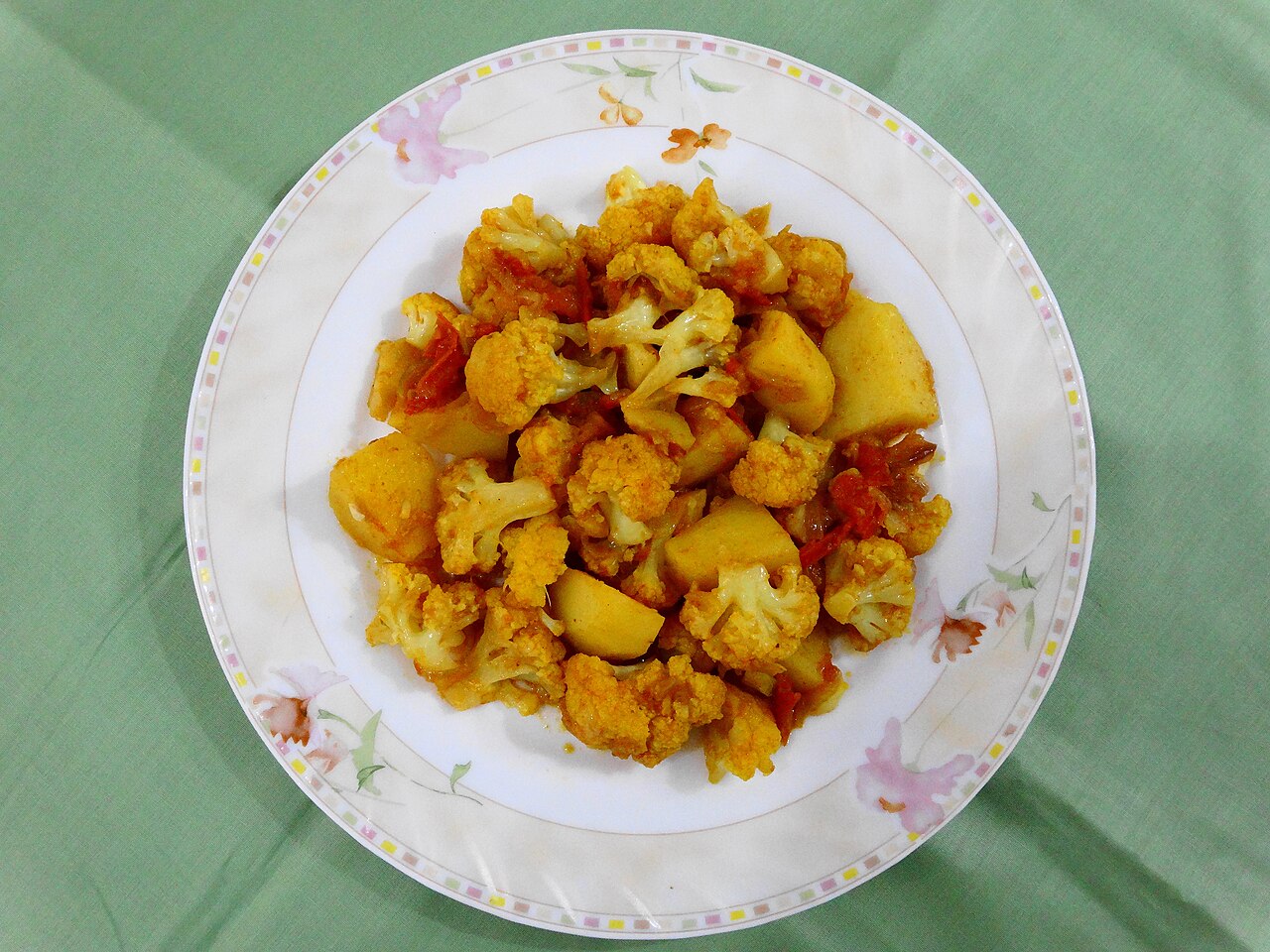
An AI-assisted editorial guide, not independently kitchen-tested. The photograph is a serving example. How we prepare and correct our guides.
For safe handling, consult FDA guidance. Send recipe corrections by email to ZYS10.