The most useful choice is not a decorative slicing pattern but a way to manage water: roast the aubergine, courgettes and peppers with space around them, then fold them into a tomato base that has already concentrated.
Roasted Vegetable Ratatouille
Plus 15 minutes for aubergine to salt and drain
Planning totals add preparation, cooking and listed waits. Overlapping stages may shorten the schedule; ingredient and equipment differences can lengthen it.
Ingredients
Times and base yield refer to the original recipe. Scaling quantities does not automatically change pan size, temperature or cooking time.
Step-by-step method
The steps describe the base batch (4 servings). The calculator changes the ingredient list only; amounts written in the steps, equipment and timing remain for that base batch.
Step 1
Salt the aubergine lightly and pat dry after 15 minutes.
Step 2
Spread aubergine, courgettes and peppers on two trays, toss with three tablespoons of oil and roast at 220°C / 428°F for 25 minutes.
Step 3
Soften onion and garlic in remaining oil in a wide pan.
Step 4
Add tomatoes and thyme and simmer for 20 minutes until concentrated.
Step 5
Fold roasted vegetables into the tomato base and cook gently for 10 minutes.
Step 6
Rest briefly and add torn basil just before serving.
Why this version works
Cut for the vegetable, not for perfect uniformity
Aubergine cubes around two centimeters give enough interior to become creamy without disappearing. Courgette can be slightly larger because it softens quickly, while pepper pieces may be flatter and broader. The goal is comparable eating size rather than identical geometry. Very small cuts expose more wet surface and break down during the final simmer. Choose small courgettes with firm centers; large watery specimens benefit from removing especially spongy seeds. In an English-language shop, aubergine may be labeled eggplant and courgette zucchini. These are naming differences, not ingredients that need separate sourcing.
Use two trays when the vegetables need them
Five tablespoons of olive oil must cover several vegetables and the tomato base, so distribute it with a bowl and spoon rather than pouring freely over one tray. The pieces should glisten lightly, with visible tray space between groups. At 220°C / 428°F, a crowded tray can still steam because the released water overwhelms evaporation. Divide between two trays if needed and exchange their oven positions when one browns faster. Look for softened interiors and some colored edges, not dried or blackened cubes. The suggested time is a checkpoint; size and oven airflow affect the finish.
Concentrate tomato before adding the roasted pieces
Cook onion slowly enough to soften its sharpness, then give the tomato mixture its own uncovered simmer. Draw a spoon across the base: the channel should close slowly rather than immediately flooding with thin water. This is a useful state to reach before the roasted vegetables enter. Ripe summer tomatoes may be sweet and juicy; canned tomatoes offer a dependable alternative when fresh ones are pale. Taste after reduction because acidity becomes clearer as water leaves. Do not automatically add sugar. First check that onion is properly softened and that the mixture has enough salt.
Preserve the last layer of freshness
Fold rather than beat the roasted vegetables into the sauce, and keep the final simmer short enough to preserve their individual textures. Thyme can withstand cooking, while torn basil is more aromatic when added at the end. Resting briefly lets juices settle around the vegetables without requiring another long cook. Ratatouille can be served warm rather than fiercely hot, which makes the olive oil and herbs easier to appreciate. This version is a practical roasted preparation; it does not claim to represent every Provençal household method or the precisely layered dish often shown in restaurant photographs.
Compare the roasted vegetables before combining them
Separate trays and even spacing let the aubergine, peppers and courgettes be checked individually. A thin courgette slice can soften before a bulky aubergine cube, even at the same oven setting. Remove or set aside components that are ready instead of assuming both trays need identical minutes. Fold them into the reduced tomato base once their centers are tender. The final simmer brings flavors together; it is not intended to boil firm vegetable pieces until they collapse. Reserve the basil for the finish so its fresh aroma remains distinct from the cooked tomato.
Ingredient choices and substitutions
Choose firm aubergine and small courgettes with fewer large seeds. Ripe local tomatoes are excellent in season; good canned tomatoes are more useful than flavorless fresh ones in winter. Use olive oil you enjoy tasting.
Fixes for this recipe
| What you notice | Likely reason | What to do |
|---|---|---|
| Water gathers underneath the vegetables. | The tomato base was loose, or roasting trays were crowded. | Lift the vegetables out temporarily and reduce the collected sauce. Fold them back in gently so they do not turn to puree during a corrective long simmer. |
| The aubergine is browned outside but feels spongy. | Pieces were too large or cooked too quickly on a dry surface. | Cover the finishing pan briefly with a little tomato liquid until the centers soften. Next time cut more evenly and coat lightly but thoroughly with oil. |
| The whole dish tastes muted after reheating. | Fresh herb aroma has faded and the sauce has thickened. | Loosen with a spoonful of water if needed, warm gently and finish with fresh basil. Taste before adding vinegar, since the tomatoes may already supply enough acidity. |
Recipe-specific questions
Must aubergine always be salted first?
The short salt-and-dry stage here helps manage surface moisture and seasoning; it is not a guarantee that every aubergine needs bitterness removed. Firm fresh specimens are more important than a long unattended salt treatment.
Can I omit one pepper color?
Yes. Red pepper gives more sweetness and green pepper a firmer vegetal note. Use the same overall quantity and accept the shift in flavor rather than buying a second color purely for appearance.
Can ratatouille become a pasta sauce?
Yes. Reserve some pasta water, combine with the finished vegetables and fold gently. Use less vegetable liquid than you would for a soup, and keep the roasted pieces substantial enough to provide contrast.
Serving and storage
Serve with a cooked egg, white beans or bread for a simple meal. A mild accompaniment lets the different vegetables remain noticeable, while a small fresh salad adds a contrasting crisp element.
Refrigerate cooled ratatouille in a shallow covered container. Reheat a portion gently rather than repeatedly heating the entire batch. Basil is best refreshed after warming. For freezing, expect the courgette to soften further; the thawed mixture is particularly useful with pasta or as a spoonable vegetable side.
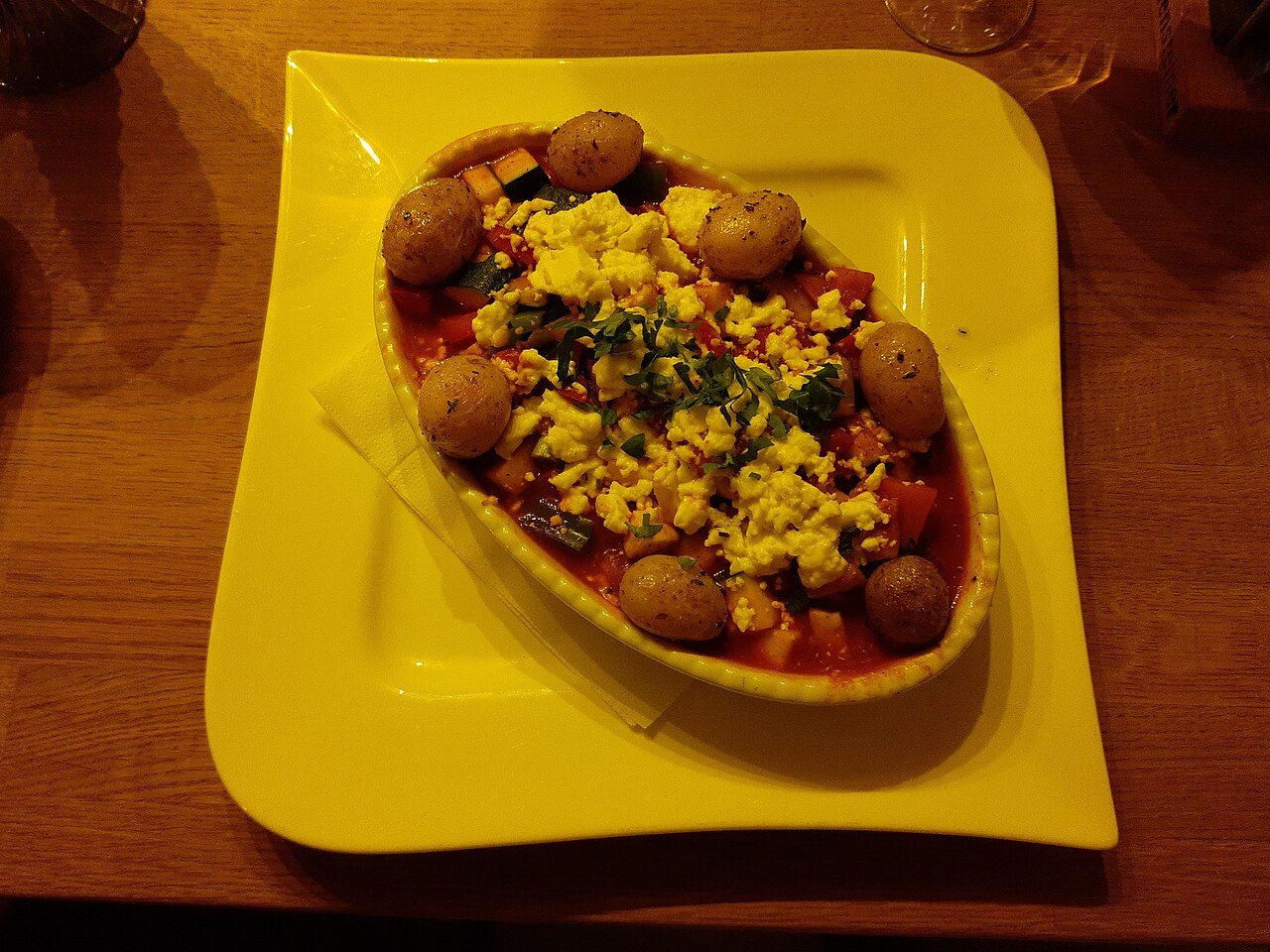
An AI-assisted editorial guide, not independently kitchen-tested. The photograph is a serving example. How we prepare and correct our guides.
For safe handling, consult FDA guidance. Send recipe corrections by email to ZYS10.