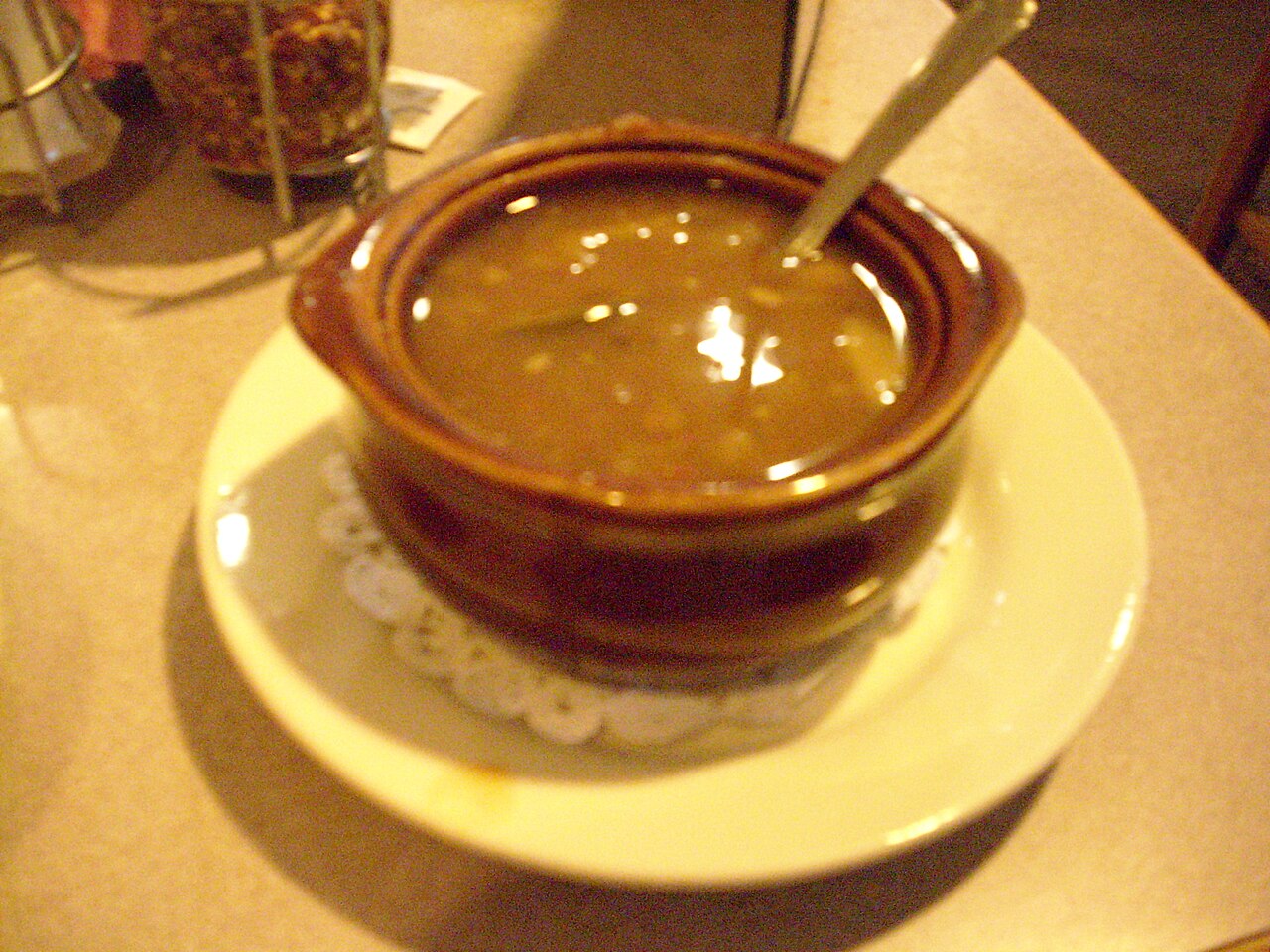
The stock and cheese matter, but they cannot supply the deep sweetness and savory aroma of properly browned onions. Give the onion stage its own attention, then decide how much broth and cheese-topped toast the finished bowl needs.
Deeply Golden French Onion Soup
Planning totals add preparation, cooking and listed waits. Overlapping stages may shorten the schedule; ingredient and equipment differences can lengthen it.
Ingredients
Times and base yield refer to the original recipe. Scaling quantities does not automatically change pan size, temperature or cooking time.
Step-by-step method
The steps describe the base batch (4 servings). The calculator changes the ingredient list only; amounts written in the steps, equipment and timing remain for that base batch.
Step 1
Cook onions in butter and oil over medium-low heat with a small pinch of salt.
Step 2
Stir regularly for 45–60 minutes, adding a splash of water when dark fond builds on the pan.
Step 3
Add stock, thyme and bay and simmer for 20 minutes.
Step 4
Taste and add a little cider vinegar if the sweetness needs balance.
Step 5
Toast baguette slices and ladle soup into grill-safe bowls.
Step 6
Top with toast and grated Gruyère and grill until bubbling and golden. Remove the bay leaf and warn diners that the bowls are very hot.
Why this version works
Slice for slow collapse rather than rapid burning
Peel the onions fully and cut them into reasonably even thin slices. A few thick wedges stay firm while fine shreds darken too early, making the pot difficult to control. One kilogram looks excessive when raw but shrinks dramatically as water escapes. Start in a broad heavy pot with enough headroom to turn the slices. Yellow onions are a reliable balance of sharpness and sweetness; very sweet varieties can produce a flatter result if the broth has little savory depth. Onion size is less important than the final prepared weight.
Use water to protect the developing fond
The onions first soften and release a great deal of liquid. Only after that moisture reduces can they build substantial color. Stir more often as the pot becomes drier, reaching into the corners where browned material gathers. A small splash of water can dissolve a dark brown patch and redistribute its flavor over the onions. It is a control tool, not a failure that resets the entire process. Black scorched flecks and an acrid smell are different from useful browning. Lower the heat before that point rather than masking bitterness with sugar.
Choose stock after imagining the final reduction
The recipe uses 1.2 liters of stock, but brand strength varies. Taste it warm before adding it to the onions. A very salty or aggressively flavored stock can dominate the finished soup after simmering. Beef stock gives a deeper savory direction; vegetable stock makes a different but worthwhile version when it has body and does not taste strongly of one vegetable. Add thyme and bay in forms that can be removed. The small cider-vinegar finish is optional balancing, not a way to replace the complexity of the onion stage.
Make the toast a deliberate part of the bowl
Toast the baguette before placing it over the soup so it does not dissolve immediately. Two thin slices are easier to eat than a large thick raft that requires force with a spoon. Gruyère should cover the bread without forming an impenetrable blanket across the entire rim. Use only bowls explicitly safe under a grill or broiler, and set them on a tray for carrying. If you lack suitable bowls, melt cheese onto the toast on a baking tray and place it over ordinary soup bowls afterward. That adaptation keeps the presentation practical and safer.
Make the toast size match the bowl
Choose grill-safe bowls before cutting the baguette so the toast fits without forming a tall dry tower above the soup. A thin layer of grated cheese should meet the bread across its surface; a large mound can brown outside while remaining unmelted underneath. Check the soup's seasoning before adding the cheese, remembering that Gruyère contributes salt to the complete spoonful. If the bowl cannot safely go under a grill, melt cheese on toast separately and place it on the soup. The serving method can change without risking unsuitable crockery.
Ingredient choices and substitutions
Yellow onions are reliable and accessible. Choose a stock that tastes clean rather than excessively salty, because it will reduce. Gruyère melts smoothly and brings a nutty flavor; other good melting cheeses create a different result.
Fixes for this recipe
| What you notice | Likely reason | What to do |
|---|---|---|
| The soup tastes sweet but lacks depth. | The onions softened without developing enough brown flavor, or the stock is weak. | For the next batch, extend the onion stage rather than adding sugar. For the current soup, adjust salt carefully and use a little savory low-salt stock concentrate only if appropriate. |
| Dark burnt bits appear after the onions stick. | The pot base became too dry over excessive heat. | Transfer unburnt onions to a clean pot without scraping black material into them. Use lower heat and small water additions when the fond is brown, before it turns black. |
| The toast is impossible to cut with a spoon. | Bread was too thick or the cheese formed an overly dense cap. | Serve toast separately or cut it into smaller pieces. Next time use thinner slices and a restrained amount of grated cheese. |
Recipe-specific questions
Can I speed this up with a high burner?
A stronger burner removes water faster but also increases scorching risk once the onions shrink. It cannot replace attention. A wide pot and an even cut are more useful improvements than a permanently maximum heat setting.
Is wine required in onion soup?
Not in this recipe. The onions, stock and cheese provide its structure and flavor. A small acidic adjustment can be made after tasting, without claiming that a stock-only version behaves identically to a wine-enriched one.
Can the onion base be cooked ahead?
Yes. Cool and refrigerate the browned onions, then add stock when making the soup. This separates the long attentive stage from the final meal and avoids holding finished cheese toast while the broth develops.
Serving and storage
Serve with a crisp green salad for a light meal. If using it as a starter, keep the portion modest because cheese, bread and onions make it more substantial than a clear broth.
Store soup without bread and cheese. Cool promptly in a shallow container and refrigerate. Reheat the broth thoroughly, loosen if concentrated and taste before salting. Make fresh cheese toast for each serving because soaked bread does not recover its original structure in storage.
An AI-assisted editorial guide, not independently kitchen-tested. The photograph is a serving example. How we prepare and correct our guides.
For safe handling, consult FDA guidance. Send recipe corrections by email to ZYS10.