Bone-in thighs need a gentle braise; the liquid may need a stronger reduction afterward. Separating those decisions gives tender meat and a wine-flavored sauce without making the chicken wait through every last minute of evaporation.
Coq au Vin with Mushrooms
Planning totals add preparation, cooking and listed waits. Overlapping stages may shorten the schedule; ingredient and equipment differences can lengthen it.
Ingredients
Times and base yield refer to the original recipe. Scaling quantities does not automatically change pan size, temperature or cooking time.
Step-by-step method
The steps describe the base batch (4 servings). The calculator changes the ingredient list only; amounts written in the steps, equipment and timing remain for that base batch.
Step 1
Brown bacon in a heavy casserole and remove it. Reserve 1 tablespoon of its rendered fat in a small heatproof bowl for the mushrooms, then brown the dried chicken in the remaining fat.
Step 2
Soften carrots, shallots and garlic, sprinkle in flour and stir for one minute.
Step 3
Add wine and stock, scraping the browned bits from the base.
Step 4
Return chicken and bacon with thyme and bay, cover and simmer gently for 50–60 minutes.
Step 5
Brown the mushrooms separately in the reserved bacon fat and add for the final 15 minutes. Check the thickest chicken pieces reach 74°C / 165°F.
Step 6
Lift out the chicken and reduce the sauce if needed before returning it to serve.
Why this version works
Choose chicken that suits a braise
For the listed 1.2 kilograms, a mixture of thighs and drumsticks gives more consistent results than a whole bird cut indiscriminately. Breast pieces can reach their endpoint while dark meat is still becoming tender, so remove them earlier if you choose a mixed bird. Skin contributes flavor during browning but will soften under the lid; this is not a crisp-skin dish. Trim loose hanging fat rather than stripping every piece bare. A heavy casserole roughly 26 centimeters across is a useful starting size, with enough space to turn pieces and enough depth to hold the liquid safely.
Build the brown foundation without burnt bacon
Start the bacon over moderate heat so some fat renders before the cubes become dark. Remove it while browning the chicken: leaving tiny bacon pieces beneath successive batches risks burning them. Pat the chicken thoroughly dry, place it skin-side down where present and let the surface color before moving it. Brown deposits on the casserole base are useful; black, acrid patches are not. Pour away excess fat if the pan looks oily, keeping a thin film for the vegetables. When the wine goes in, scrape gently with a wooden spoon to dissolve the browned layer into the future sauce.
Use wine as an ingredient with limits
The recipe uses 400 milliliters of dry red wine against 300 milliliters of stock, so the wine's acidity is noticeable. Choose a balanced, uncomplicated bottle rather than a very tannic or sweet one. The stock should be mild and low in salt because the sauce becomes more concentrated later. Wine is not interchangeable with an equal amount of vinegar. For an alcohol-avoiding version, replace the wine with additional unsalted stock and introduce a small acidic finish only after tasting; describe that as a stock-braised adaptation. Cooking time alone cannot support an alcohol-free claim.
Finish mushrooms and sauce on their own terms
Mushrooms benefit from a separate hot skillet because a wet casserole mostly steams them. Cut them in halves or quarters rather than into thin pieces that disappear. Add them near the end so their browned surfaces retain some identity. When chicken is tender and safely cooked, lift it onto a clean plate and inspect the sauce. It should lightly coat a spoon, not form a thick flour paste. Reduce uncovered if thin, or loosen with hot stock if dense. Return the meat only long enough to warm and coat it, then remove thyme stems and the bay leaf.
Choose a wine alternative by the sauce it will create
The red wine is a substantial part of the braising liquid, not an optional splash whose omission leaves the rest unchanged. If avoiding wine, choose a separately planned stock-based adaptation and adjust acidity at the end rather than replacing the whole wine volume with vinegar. A stronger stock also changes salt concentration during reduction. The dish can still make a useful chicken braise, but its flavor will differ. Keep this distinction clear when shopping so a missing bottle does not turn into a rushed last-minute substitution inside a hot casserole.
Ingredient choices and substitutions
Choose bone-in thighs and drumsticks of similar size. Use a sound dry wine you would enjoy in food; expensive bottles are unnecessary. An alcohol-free variation can use extra stock with a little vinegar, though the flavor changes.
Fixes for this recipe
| What you notice | Likely reason | What to do |
|---|---|---|
| The chicken is tender but the liquid looks like soup. | The covered casserole retained more moisture than expected. | Lift out the chicken and reduce the liquid uncovered. Stop when it coats a spoon; do not keep braising the chicken merely to thicken its sauce. |
| The sauce tastes harsh rather than pleasantly winey. | The wine may be unusually tannic, or the sauce needs a little more integration. | Simmer the sauce separately and taste with potato or bread. A small knob of butter can round the mouthfeel, but it cannot rescue burnt flavors. |
| The mushrooms seem rubbery and pale. | They released water in a crowded pan instead of browning. | Cook them in smaller batches in a broad skillet next time. For the current pot, accept a softer mushroom texture rather than repeatedly boiling the chicken. |
Recipe-specific questions
Should I marinate the chicken in wine overnight?
It is not required for this version. The sauce already supplies ample wine character. If marinating, refrigerate the chicken, drain it well and dry its surface before browning; wet pieces will steam and darken unevenly.
Can I use boneless thighs?
Yes, but they generally need less time and bring less bone-derived body to the liquid. Begin checking earlier, keep the simmer gentle and reduce the sauce after removing the cooked meat.
Are pearl onions necessary?
No. The listed small shallots give a practical alternative. Keep them in halves or large pieces so some remain recognizable. Finely chopped onion makes a more integrated sauce but changes that textural detail.
Serving and storage
Mashed potatoes catch the sauce without competing with it. Serve green beans or a sharply dressed leaf salad alongside, and keep extra bread available rather than making the plate heavier with another rich sauce.
For advance cooking, cool the chicken and sauce promptly in shallow containers, refrigerate and reheat gently until thoroughly hot. Keep separately browned mushroom garnish apart if you want its texture to remain distinct. Skimming chilled surface fat is easier than aggressively stirring a greasy sauce.
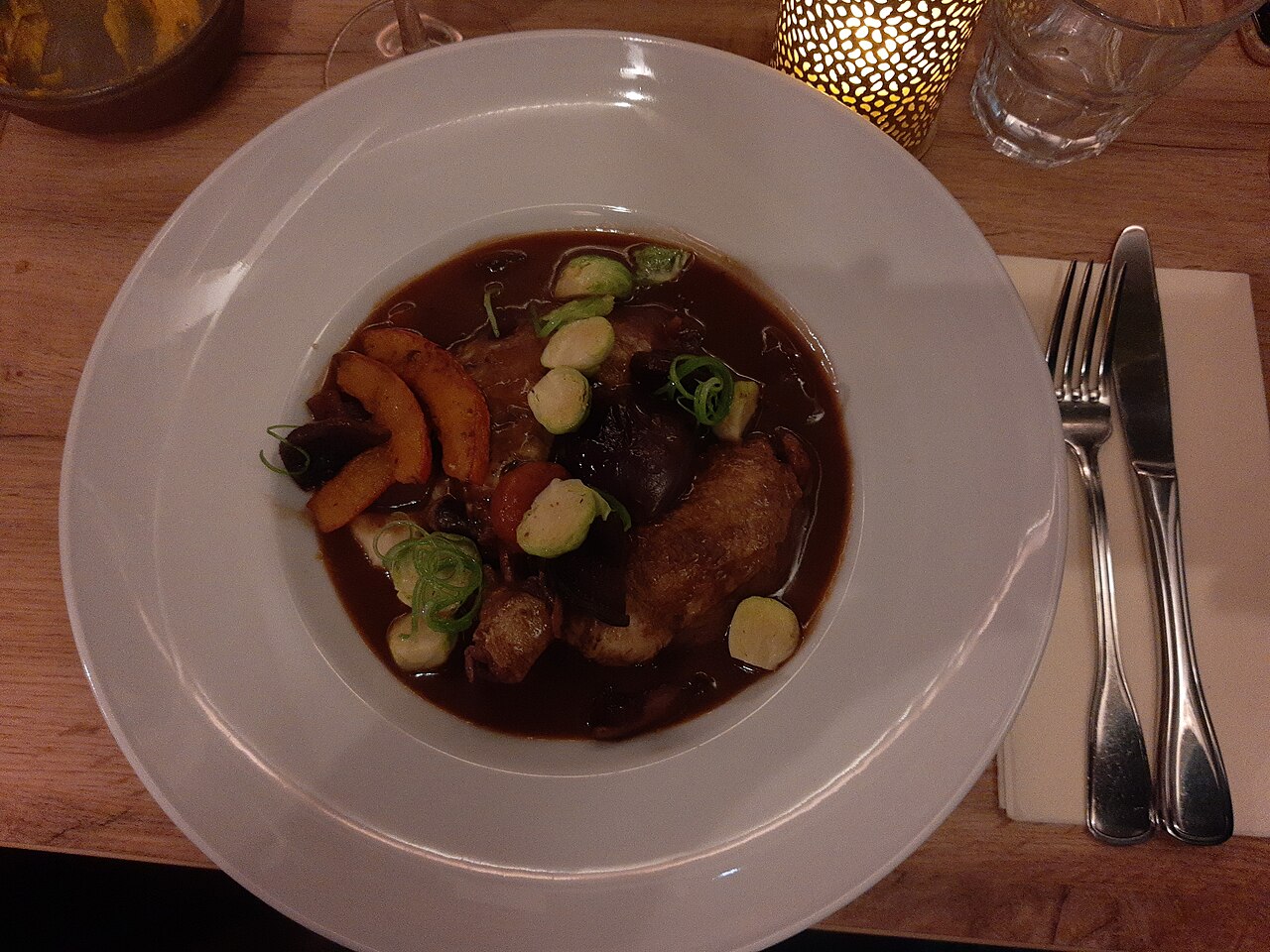
An AI-assisted editorial guide, not independently kitchen-tested. The photograph is a serving example. How we prepare and correct our guides.
For safe handling, consult FDA guidance. Send recipe corrections by email to ZYS10.