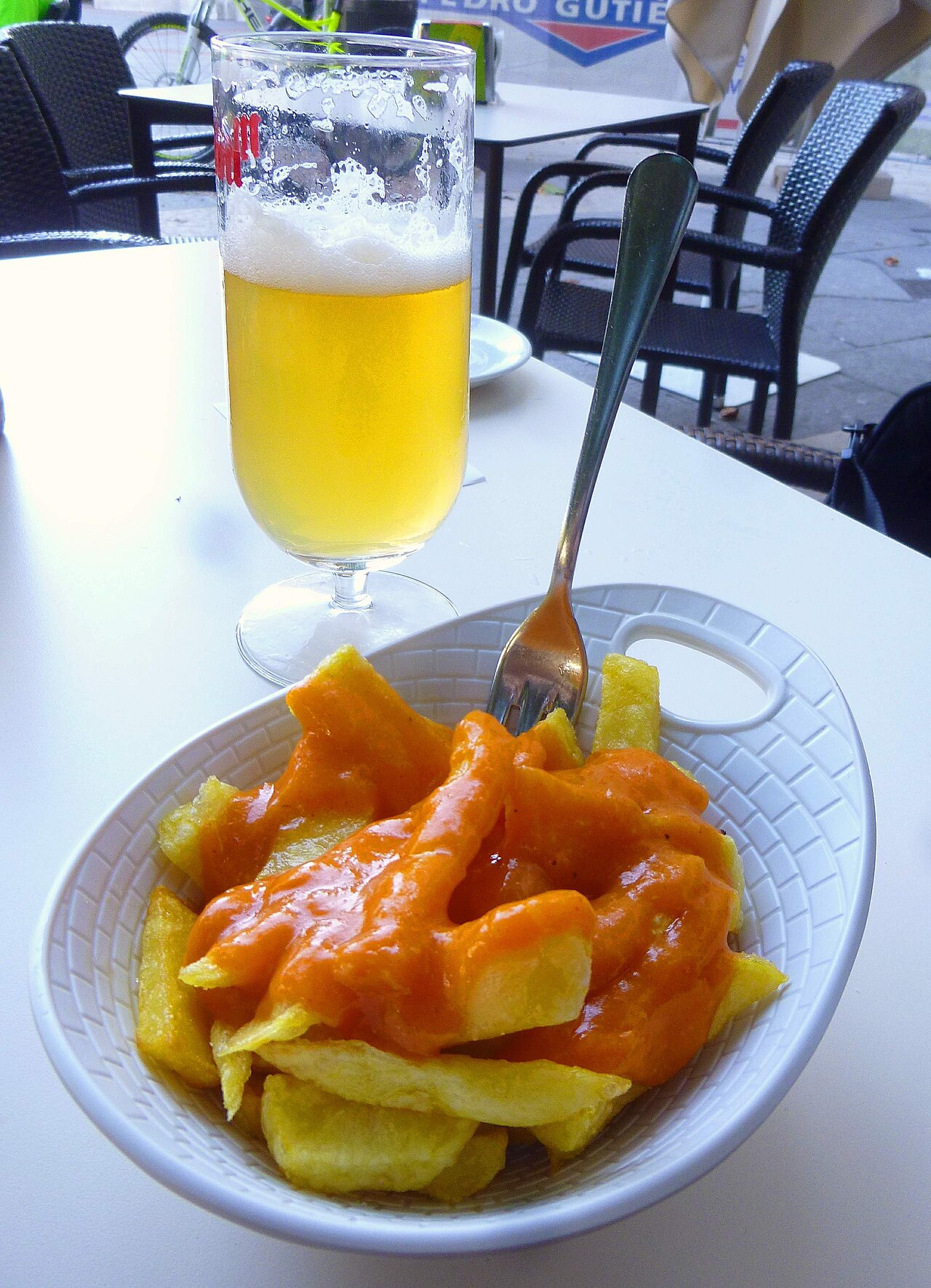
This version roasts parboiled potatoes and makes a paprika-based sauce separately. The order matters: finish the sauce before the potatoes leave the oven, then combine only as they reach the table.
Crisp Patatas Bravas
Planning totals add preparation, cooking and listed waits. Overlapping stages may shorten the schedule; ingredient and equipment differences can lengthen it.
Ingredients
Times and base yield refer to the original recipe. Scaling quantities does not automatically change pan size, temperature or cooking time.
Step-by-step method
The steps describe the base batch (4 servings). The calculator changes the ingredient list only; amounts written in the steps, equipment and timing remain for that base batch.
Step 1
Cut potatoes into bite-size chunks and parboil in salted water for 7 minutes.
Step 2
Drain, let steam dry and toss with 2 tablespoons oil and half the listed teaspoon fine salt.
Step 3
Roast at 220°C / 428°F for 30–35 minutes, turning until crisp.
Step 4
Soften onion and garlic in remaining oil, then add flour and both paprikas briefly.
Step 5
Whisk in stock and simmer for 8 minutes, then blend and add vinegar. Taste and use the remaining fine salt only as needed, considering the stock’s saltiness.
Step 6
Spoon a little bravas sauce over the hot potatoes and serve the rest separately.
Why this version works
Choose potatoes for a rough crisp surface
The 800 grams of potatoes should be cut into bite-sized chunks of roughly three centimeters. Floury potatoes are useful because their softened surfaces become slightly rough after draining, creating more edges for browning. Waxy potatoes hold cleaner shapes but may have a firmer less fluffy center. Parboiling is not meant to cook the chunks until they fall apart. Stop when the exterior has softened and a knife begins entering the center, then drain carefully. Let steam escape before adding oil; water clinging to the surface delays roasting and can turn the tray into a shallow steaming pan.
Give the tray room and enough preheating
Spread the dried chunks in one layer with gaps, using another tray if the potatoes would otherwise overlap. Toss with the measured oil so the edges glisten without sitting in a deep puddle. A fully heated 220°C / 428°F oven helps set the exterior before the center dries. Turn once or twice when a crust has formed instead of repeatedly scraping soft pieces away from the tray. If one side of your oven colors faster, rotate the tray. The endpoint is a crisp golden outside and tender interior, not a particular dark shade that disguises an undercooked center.
Treat paprika as an aromatic that can burn
The sauce combines smoked and hot paprika, which have different jobs. Smoked paprika supplies aroma and the hot variety supplies adjustable heat. Cook the onion and garlic first, then stir the flour and paprikas briefly before adding stock. A dry red powder mixture left over strong heat can scorch quickly. Whisk in stock gradually to avoid flour lumps and simmer until the sauce loses a raw starchy flavor. Use a mild vegetable stock because the sauce will concentrate. This is a stock-based home bravas sauce, not a claim that every Spanish bar uses one identical tomato or paprika formula.
Balance the sauce before it touches the potatoes
Blend for a smooth coating if desired, then add the sherry vinegar in a measured amount and taste. Acid should lift the paprika and onion rather than make the sauce sharply sour. If too thick to spoon easily, add hot stock a little at a time. If watery, reduce separately instead of pouring a large quantity over the potatoes and hoping it thickens on the plate. Spoon a modest stripe or small pool onto each serving and offer extra in a bowl. Keeping most crisp surfaces uncovered makes the textural contrast last longer.
Judge the potatoes and sauce as separate components
The potatoes need enough space and surface dryness to crisp; the sauce needs a cooked onion-paprika base and a lightly thickened consistency. Fix each component before bringing them together. If the sauce is stiff, loosen it with a little unsalted hot liquid rather than spreading a thick paste over every potato. If the potatoes are pale, keep the sauce off while they finish roasting. Serve some sauce alongside so diners can choose between a crisp bite and a sauced one instead of letting the whole tray sit under moisture.
Ingredient choices and substitutions
Choose floury potatoes for crisp edges and a soft center. Smoked and hot paprika have different roles, so taste them before using. Fresh paprika smells aromatic rather than dusty.
Fixes for this recipe
| What you notice | Likely reason | What to do |
|---|---|---|
| Potatoes are soft and pale after roasting. | They entered the oven wet, crowded or before full preheating. | Spread them more widely and continue roasting if the centers are already tender. Next time let steam escape after draining and use enough tray space. |
| The sauce tastes bitter or dusty. | Paprika scorched or the flour did not cook properly. | A burnt paprika sauce is best remade. For a merely raw flour taste, simmer gently with enough liquid before adjusting seasoning. |
| Crisp potatoes become soggy immediately on the plate. | Too much thin sauce covered the whole surface. | Serve the sauce separately or add a smaller amount at the last moment. Do not hold the completed dish covered while preparing other food. |
Recipe-specific questions
Can I skip parboiling?
You can roast raw chunks, but the timing and texture change. Parboiling gives this version its soft center and roughened exterior. If skipping it, cut evenly and allow longer cooking rather than keeping the same schedule.
Can sweet paprika replace hot paprika?
Yes if you want less heat, but it does not replace the smoky note unless it is also smoked. Adjust heat independently with a measured mild chile rather than assuming all red paprika products taste the same.
Is mayonnaise essential?
No. This recipe focuses on the bravas sauce. A garlic mayonnaise can be offered separately as an additional rich element, but it should not replace the paprika sauce or drown the potatoes.
Serving and storage
Serve as a small plate with a fresh tomato salad, beans or simply cooked fish. The sauce already brings smoke and heat, so a mild companion makes the meal easier to balance.
Keep leftover sauce and potatoes separate. Refrigerate promptly once cooled. Reheat potatoes on a hot tray to regain some crispness and warm the sauce separately with a little stock if it has thickened. The first roast gives the best texture, so avoid making far more than needed.
An AI-assisted editorial guide, not independently kitchen-tested. The photograph is a serving example. How we prepare and correct our guides.
For safe handling, consult FDA guidance. Send recipe corrections by email to ZYS10.