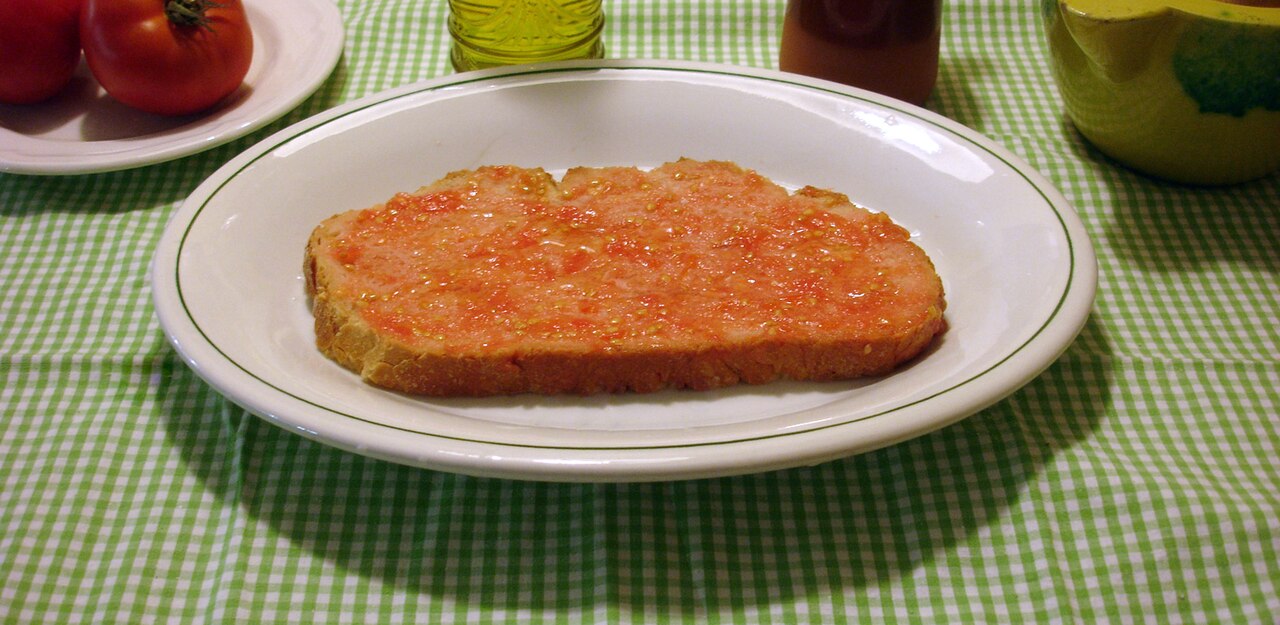
Grated ripe tomato, rough toast, a light garlic rub and good olive oil make the dish. The useful technique is controlling tomato water and assembling at the last moment so the bread stays pleasant to bite.
Pan con Tomate
Planning totals add preparation, cooking and listed waits. Overlapping stages may shorten the schedule; ingredient and equipment differences can lengthen it.
Ingredients
Times and base yield refer to the original recipe. Scaling quantities does not automatically change pan size, temperature or cooking time.
Step-by-step method
The steps describe the base batch (4 servings). The calculator changes the ingredient list only; amounts written in the steps, equipment and timing remain for that base batch.
Step 1
Halve tomatoes and grate the cut faces into a bowl, stopping when only the skins remain.
Step 2
Let the pulp stand in a sieve briefly if very watery.
Step 3
Toast thick bread slices until crisp on the surface and lightly colored.
Step 4
Rub the warm bread gently with cut garlic.
Step 5
Spoon tomato pulp over the toast in a thin even layer.
Step 6
Finish with olive oil and flaky salt and serve immediately.
Why this version works
Choose tomatoes that make their own seasoning base
Use four ripe tomatoes that smell of tomato rather than simply looking red. Large juicy varieties grate easily, but a very watery fruit may need brief draining. Cut each in half and grate the cut face on the coarse side of a box grater, stopping before your fingers reach the skin. The skin acts as a temporary handle and remains behind. Taste the pulp before adding salt. If it lacks flavor, more olive oil will not create tomato sweetness. Choosing produce in season is more useful here than paying for a named origin that has traveled while underripe.
Drain lightly rather than removing all the juice
Tomato juice is part of the topping, so the goal is not a dry pile of grated flesh. Let only an unusually thin watery portion drip away for a short time. A thick pulpy mixture spreads more evenly and wets the bread less abruptly than a bowl of free liquid. Save the drained juice for a soup or dressing rather than treating it as waste. Salt close to assembly because it draws out more moisture. If making pulp ahead, refrigerate it separately and stir before deciding whether it needs another brief drain.
Toast a surface that can catch the pulp
Cut rustic bread into slices substantial enough to support a topping, roughly a centimeter or slightly thicker depending on the loaf. A close sturdy crumb with a textured surface is easier to eat than a slice full of very large holes. Toast until the outside is crisp and lightly colored while some tenderness remains inside. Completely drying a thick slice into a hard rusk makes it difficult to bite cleanly. Rub the warm rough surface once or twice with a halved garlic clove. The toast acts like a grater, so a small rub can deliver more garlic than expected.
Apply tomato, oil and salt with restraint
Spread a thin even layer of tomato so the bread remains visible in places rather than buried under a mound. Drizzle olive oil afterward for a clear aromatic finish and add a small amount of flaky salt. If using fine salt, use less by volume because it packs more densely. Keep the topping and toast separate until people are ready to eat. For a shared table, serve components for immediate assembly instead of arranging a tray far in advance. This simple preparation is about the contrast of toast and fresh pulp; adding many toppings can become a different dish rather than an improvement.
Decide whether the bread will be eaten immediately
Grated tomato begins wetting the toast as soon as it is applied. For a shared meal with uncertain arrival times, keep the prepared pulp, toast, oil and salt separate and dress small rounds as needed. Do not solve waiting time by making the bread extremely hard; that changes its bite without removing the moisture transfer. Use the grated flesh while leaving skins behind, and drain only obvious excess liquid. A dry tomato paste is not the target: enough tomato juice should remain to season the rough bread surface.
Ingredient choices and substitutions
Choose very ripe tomatoes and a bread with an open but sturdy crumb. A fruity olive oil complements the tomato. Flaky salt adds small bursts of seasoning, though a smaller amount of fine salt also works.
Fixes for this recipe
| What you notice | Likely reason | What to do |
|---|---|---|
| Bread turns soggy before the tray reaches the table. | Tomato was too watery or assembled too early. | Drain excess liquid briefly and top the bread immediately before serving. Keep later portions unassembled rather than covering a large finished tray. |
| Raw garlic overwhelms the tomato. | The warm toast received a heavy repeated rub. | Use a lighter touch or omit garlic from some slices. More tomato may soften the current bite, but a restrained rub is easier to control from the start. |
| The toast is painful or awkward to bite. | It was sliced too thick and dried completely. | Use moderate thickness and retain a little tenderness inside. A crisp surface is useful; a rigid hard slab is not necessary for supporting tomato. |
Recipe-specific questions
Should I grate tomato directly onto each slice?
You can rub a cut tomato onto toast in another common approach. Grating into a bowl first makes water content easier to judge and helps portion an even topping for several people.
Can cherry tomatoes be used?
They can taste excellent, but their small size makes grating awkward. Finely chop or crush them and drain excess juice, accepting a chunkier texture rather than risking fingers on a grater.
Is this still useful outside tomato season?
It is worth waiting for tomatoes that actually taste good. If only watery unripe fruit is available, choose another toast topping rather than expecting salt and expensive oil to create the missing flavor.
Serving and storage
Serve as a small breakfast or alongside eggs, beans or a simple salad. Any ham or cheese should be offered as an additional topping, leaving some slices plain to appreciate the tomato and oil.
Store tomato pulp covered in the refrigerator for prompt use and toast bread near the meal. Do not refrigerate assembled slices expecting them to regain crispness later. Leftover pulp can become a component in a cooked tomato sauce, while stale plain bread can be toasted separately.
An AI-assisted editorial guide, not independently kitchen-tested. The photograph is a serving example. How we prepare and correct our guides.
For safe handling, consult FDA guidance. Send recipe corrections by email to ZYS10.