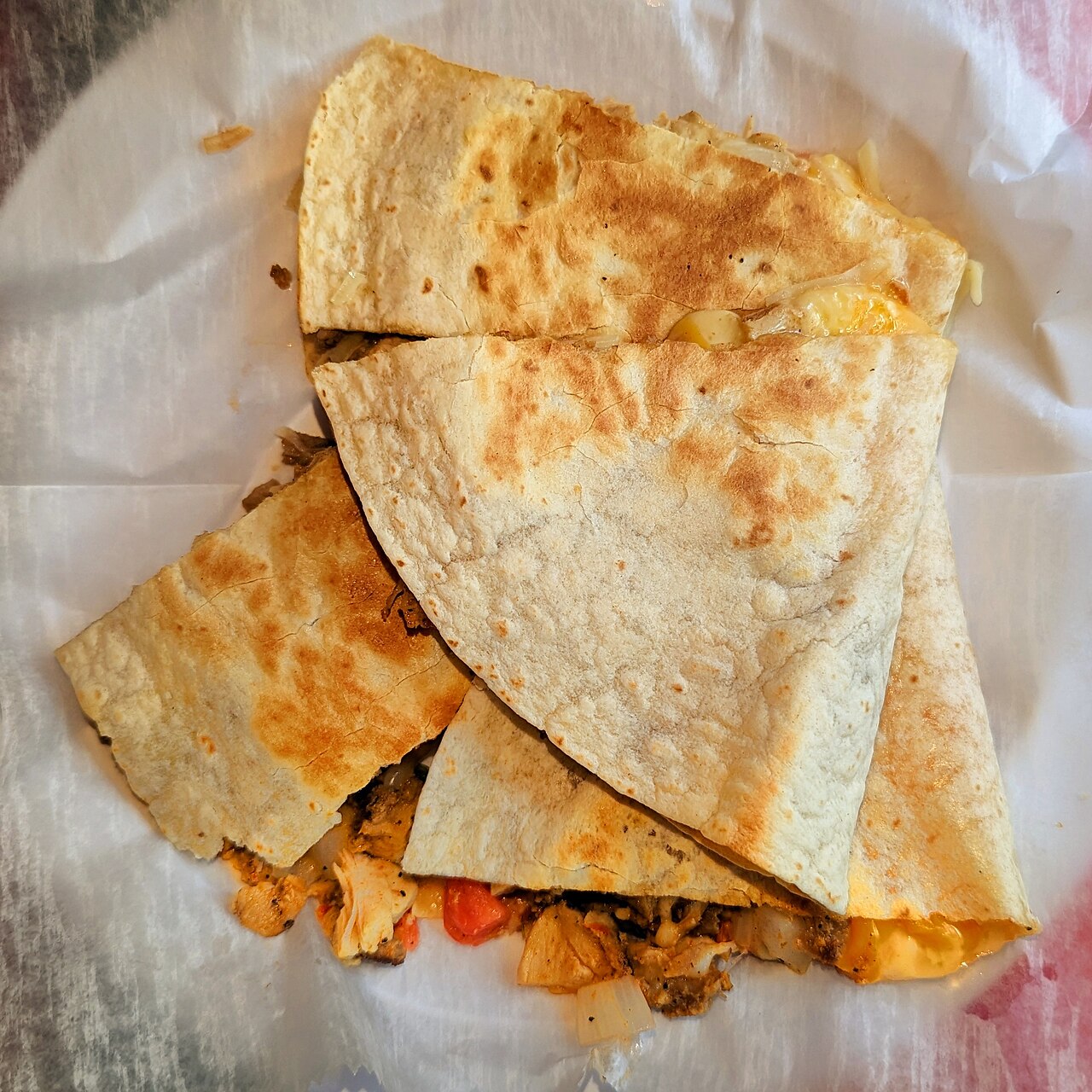
The chicken and vegetables should be hot and relatively dry before assembly. This version uses flour tortillas for easy folding and a small amount of cumin, keeping the texture of the pan-toasted wrapper central.
Golden Chicken Quesadillas
Planning totals add preparation, cooking and listed waits. Overlapping stages may shorten the schedule; ingredient and equipment differences can lengthen it.
Ingredients
Times and base yield refer to the original recipe. Scaling quantities does not automatically change pan size, temperature or cooking time.
Step-by-step method
The steps describe the base batch (4 servings). The calculator changes the ingredient list only; amounts written in the steps, equipment and timing remain for that base batch.
Step 1
Cook pepper and onion in half the oil until softened and lightly colored.
Step 2
Add cumin and cooked chicken, stir until the chicken reaches 74°C / 165°F, and let excess liquid evaporate before filling the tortillas.
Step 3
Scatter cheese over half of each tortilla and add a modest layer of chicken mixture.
Step 4
Fold the tortillas and cook in a lightly oiled skillet over medium heat.
Step 5
Turn once the underside is golden and continue until the cheese has melted.
Step 6
Rest for one minute before cutting into wedges and serve salsa separately.
Why this version works
Use cooked chicken that shreds into small pieces
Long thick strands can pull an entire filling layer out with one bite. Shred or chop the 350 g cooked chicken into manageable pieces, removing any bones, cartilage or rubbery skin. Leftover chicken is useful only if it was cooled and refrigerated safely. If it carries a lot of cooking juice, drain excess before mixing with vegetables. The quick tortilla cook is designed to melt cheese and crisp the outside, not to safely cook large raw chicken pieces hidden inside. Raw chicken must be cooked separately before this assembly method begins.
Cook peppers and onion until their loose water is gone
Slice the vegetables thinly and cook in a broad pan with enough room for steam to escape. They should soften and develop a little color before the chicken enters. Stir the cumin briefly through the hot mixture so it becomes aromatic rather than leaving a dusty raw spice impression. The filling should look moist but not leave a puddle when pushed aside. If the mixture is wet, cook a little longer before assembly. Adding more cheese to absorb water produces a heavier filling without solving the steam that softens the tortilla.
Choose cheese for melting rather than age
Oaxaca or Monterey Jack gives a supple melt that binds the filling. An aged crumbly cheese can contribute flavor but will not perform the same structural job alone. Grate or pull the cheese into small pieces so it melts within the tortilla's short browning time. Divide it across the contact surfaces, with some below and some above the filling, rather than placing all of it in a thick central lump. Check seasoning after considering the cheese's salt. Strongly seasoned rotisserie chicken may already need no additional salt.
Keep the layer thin and the pan moderate
Fill only half each tortilla, leaving a small border, then fold. A medium skillet temperature allows cheese to melt before the wrapper burns. Brush the pan lightly with oil rather than deep-frying the tortilla in a pool. Turn after the first side is golden and the filling has begun holding together. Rest on a rack for a minute before cutting so molten cheese is less likely to run out. If making several, keep finished pieces separated in a low oven briefly; stacking them tightly traps steam and softens the crisp faces.
Divide the filling to match eight tortillas
Eight folded tortillas need eight modest portions of filling rather than four large piles. Spread cheese near the folded edge and distribute the chicken-pepper mixture thinly enough that the tortilla can close without pressure. If the cooked mixture is especially bulky, serve the surplus beside the quesadillas rather than packing it all inside. Keep salsa outside during cooking so it does not introduce extra moisture at the seam. Turn with support beneath the whole folded half; pressing repeatedly to contain an overfilled tortilla squeezes hot cheese out into the pan.
Ingredient choices and substitutions
Choose a cheese that melts smoothly rather than a dry aged cheese alone. Flour tortillas should be flexible and large enough to fold. Cooked chicken must be moist but not dripping with cooking juices.
Fixes for this recipe
| What you notice | Likely reason | What to do |
|---|---|---|
| The tortilla burns while cheese stays firm. | The heat was too high or the filling was too thick and cold. | Lower the pan heat and warm the filling before the next assembly. A short covered interval can help melt cheese, but uncover afterward so trapped steam does not remain against the wrapper. |
| Filling spills out during turning. | The tortilla was overfilled or had too little melted cheese near the edges to hold the contents. | Use a smaller quantity and turn with a broad spatula supporting the folded side. Let the first side set before moving the quesadilla repeatedly. |
| The center is wet and the outside softens. | Vegetable or chicken liquid was enclosed in the tortilla. | Cook off excess moisture before filling the remaining tortillas. Keep salsa outside the quesadilla rather than adding a large wet spoonful to every interior. |
Recipe-specific questions
Can corn tortillas be used?
Yes, as smaller quesadillas with a more pronounced maize flavor. Warm them until flexible before folding, or use two small tortillas as a sandwich if they crack easily. Their size and fragility require a smaller filling quantity than a medium flour tortilla.
Can the filling be made vegetarian?
Cooked drained beans or browned mushrooms can replace chicken in a separate variation. Remove mushroom water and mash only some beans so the filling holds together without becoming a wet paste. Check cheese and any prepared seasonings according to the diner's dietary requirements.
Is a sandwich press a good shortcut?
It can heat both faces at once, but heavy pressure may squeeze out the filling and flatten the tortilla excessively. Use a thin layer, protect the appliance as its instructions allow and watch the cheese rather than assuming the press timer matches the skillet method.
Serving and storage
A crunchy cabbage salad, guacamole or a small bowl of salsa gives freshness beside the melted cheese. Offer dips on the side so the crisp tortilla can remain crisp until each bite, and avoid adding every rich topping simultaneously.
Refrigerate leftover filling separately from tortillas when possible and assemble fresh quesadillas later. Chill cooked quesadillas promptly and reheat on a rack or in a dry skillet until the center is thoroughly hot. A microwave softens the wrapper, so use it only when that texture trade-off is acceptable. Keep fresh salsa and cold dairy dips separate from reheated portions.
An AI-assisted editorial guide, not independently kitchen-tested. The photograph is a serving example. How we prepare and correct our guides.
For safe handling, consult FDA guidance. Send recipe corrections by email to ZYS10.