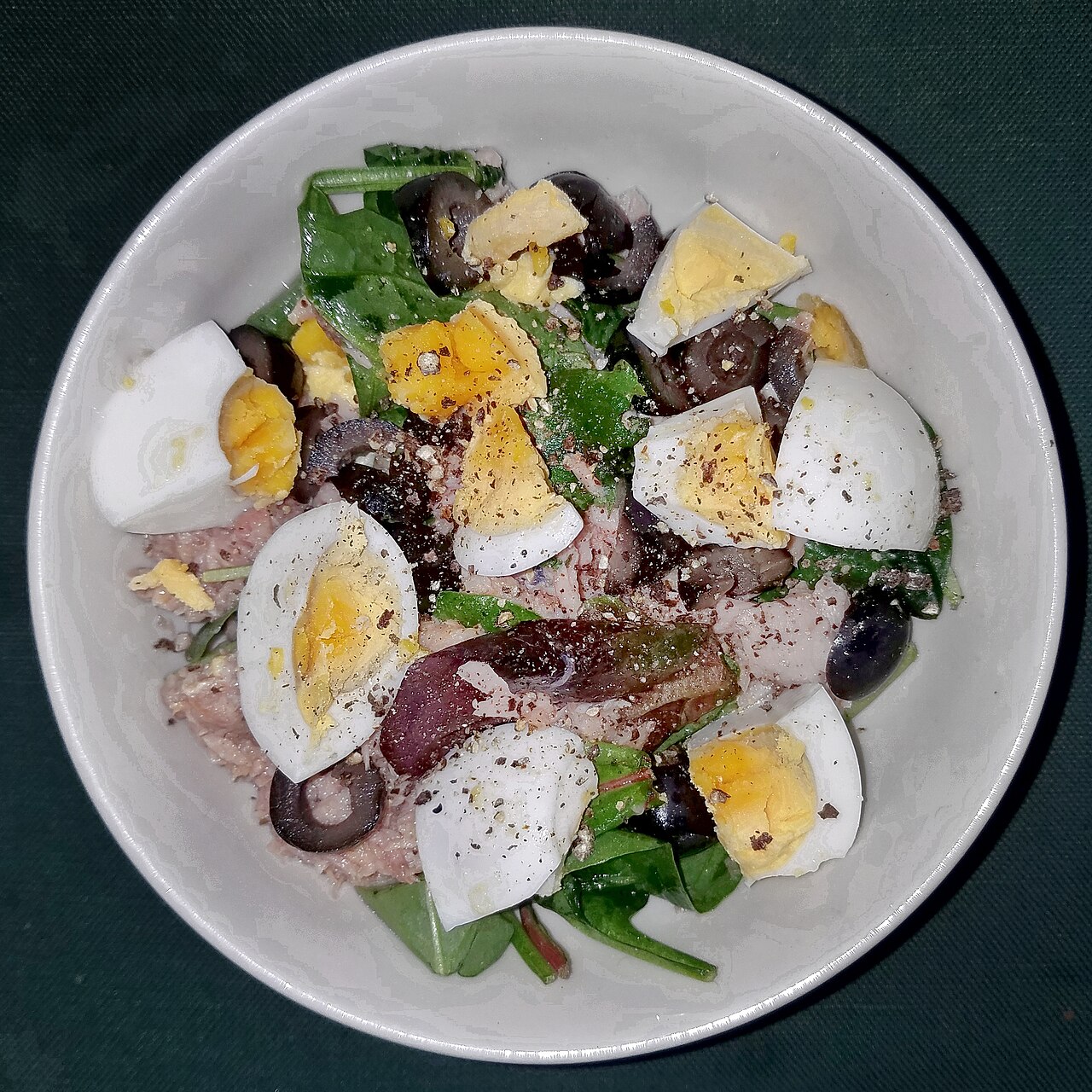
Cooked potatoes and beans make it substantial, while tuna, eggs, olives and tomatoes remain separate elements. The recipe states its adaptation openly because regional definitions of salade niçoise are more particular than a single universal formula.
Niçoise-Inspired Tuna Salad
Planning totals add preparation, cooking and listed waits. Overlapping stages may shorten the schedule; ingredient and equipment differences can lengthen it.
Ingredients
For fractional eggs, beat an extra egg or yolk and measure the required fraction.
Times and base yield refer to the original recipe. Scaling quantities does not automatically change pan size, temperature or cooking time.
Step-by-step method
The steps describe the base batch (4 servings). The calculator changes the ingredient list only; amounts written in the steps, equipment and timing remain for that base batch.
Step 1
Boil potatoes until just tender, drain and slice while warm.
Step 2
Cook green beans in boiling water until crisp-tender, then cool and drain.
Step 3
Boil eggs until fully set for this version, cool, peel and quarter.
Step 4
Whisk olive oil, vinegar and mustard into a dressing and toss a little with the warm potatoes.
Step 5
Arrange potatoes, beans, tomatoes, drained tuna, eggs and olives on a platter.
Step 6
Add anchovies if using and spoon over remaining dressing just before serving.
Why this version works
Give each cooked component its own endpoint
Use small waxy potatoes that keep their shape after boiling. Test with a thin knife and drain when the center is tender without the skin splitting apart. Green beans need a shorter cook and should retain some bite; do not keep them boiling simply because the potatoes are not ready. Cool and dry the beans before plating so they do not dilute the dressing. The eggs in this version are fully set, then cooled for cleaner peeling and slicing. Separate timings take slightly more organization, but they preserve the contrasts that make a composed salad worthwhile.
Season warm potatoes while keeping fish distinct
A small amount of dressing on warm sliced potatoes helps distribute seasoning before the platter is built. Use only part of the dressing at that stage, since tuna, olives and optional anchovies will bring their own salt and oil. Flake tuna into generous pieces instead of pulverizing it with the potatoes. If the can contains good-tasting olive oil, you may use some in the measured dressing quantity, but do not automatically pour all can liquid over the platter. Water-packed tuna gives a lighter result and may need a little more dressing to avoid a dry impression.
Choose tomatoes and olives for a balanced bite
Ripe tomatoes contribute the sweet acidic juices that make the cooked ingredients feel fresher. Cut them into wedges that can be lifted with a fork, and drain excessive loose juice if the fruit is unusually watery. Taste the olives and anchovies before adding salt to the dressing. Some products are strongly brined, while others are milder and more fragrant. Dijon helps connect oil and vinegar in this home version, but it should not dominate the vegetables. A complete forkful is the best seasoning test because an isolated olive or spoonful of dressing will naturally taste intense.
Build a platter that can be served without crushing
Choose a broad shallow platter and arrange the potatoes and beans as a base, leaving room for tuna, egg quarters and tomato wedges. Spoon dressing over exposed vegetables rather than drenching the egg yolks. This structure makes it easy for diners to take a balanced portion without repeatedly stirring the salad. Keep the temperature cool to pleasantly temperate, not warm from a long unrefrigerated wait. If transporting it, chill fish and eggs and pack dressing separately. A pretty platter does not replace practical handling, especially on a warm outdoor table.
Decide which ingredients should absorb the dressing
Warm sliced potatoes can take some dressing before the platter is built, while eggs, tuna and tomatoes are easier to keep distinct when arranged afterward. Set aside enough dressing for the final surface rather than allowing the potatoes to absorb the whole allowance. Drain tuna according to the amount of oil you want in the finished salad; its packing oil is separate from the measured dressing unless deliberately counted. Anchovies and olives season individual bites strongly, so compare a combined forkful before adding more salt across the entire platter.
Ingredient choices and substitutions
Choose tuna with a clean flavor and tomatoes ripe enough to contribute sweetness. Small waxy potatoes hold their shape. Taste olives and anchovies before adding salt to the dressing.
Fixes for this recipe
| What you notice | Likely reason | What to do |
|---|---|---|
| Liquid pools underneath the finished salad. | Beans were not dried, tomatoes were very watery or too much dressing was added. | Drain the vegetables before assembly and add dressing in stages. Move the current salad gently to a fresh platter if pooling is substantial, keeping fragile tuna pieces intact. |
| The potatoes taste bland while the dressing is sharp. | All dressing was added cold at the last moment. | Season warm potato slices with a portion of the dressing earlier. Do not compensate by making the entire platter more acidic. |
| The salad looks like a mixed paste. | Eggs, tuna and soft potatoes were stirred together forcefully. | Compose the platter in layers and use two broad serving spoons. Keep fish and eggs for the later stages instead of treating them as ingredients to mash through the base. |
Recipe-specific questions
Why call this Niçoise-inspired rather than the only authentic version?
This recipe includes cooked potatoes and beans, ingredients whose place in traditional Niçoise salad is debated. Describing the adaptation is more helpful than claiming every regional cook follows the same list.
Can I use freshly cooked tuna?
Yes, but it becomes a different preparation with its own cooking and cooling steps. Choose a safely cooked finish appropriate to the diner, chill if preparing ahead and slice rather than breaking it into tiny dry flakes.
Should the anchovies be mixed into the dressing?
They can be, but keeping them as optional fillets lets diners control their intensity. If incorporating them, reduce other salt and chop finely so one bite does not contain a large concentrated piece.
Serving and storage
Serve with crusty bread and perhaps a lemon wedge. The salad already includes several protein-rich and starchy elements, so it does not need a second rich main dish to feel complete.
Store prepared potatoes, beans, eggs and tuna chilled in separate covered containers when making ahead. Assemble near serving and keep dressing apart until needed. Leftover dressed tomato softens quickly, so prepare a sensible quantity rather than expecting the completed platter to keep its first-day texture.
An AI-assisted editorial guide, not independently kitchen-tested. The photograph is a serving example. How we prepare and correct our guides.
For safe handling, consult FDA guidance. Send recipe corrections by email to ZYS10.