Its yogurt-enriched dough should stretch easily after resting, then meet a fully heated pan for bubbles and scattered brown spots. The main controls are dough softness, relaxed shaping and enough pan heat without leaving a thick raw center.
Skillet Yogurt Naan
Includes 60–90 minutes rising and 15 minutes resting the divided dough.
Planning totals add preparation, cooking and listed waits. Overlapping stages may shorten the schedule; ingredient and equipment differences can lengthen it.
Ingredients
Times and base yield refer to the original recipe. Scaling quantities does not automatically change pan size, temperature or cooking time.
Step-by-step method
The steps describe the base batch (8 naan, about 4 servings). The calculator changes the ingredient list only; amounts written in the steps, equipment and timing remain for that base batch.
Step 1
Mix yeast, warm water and sugar, then add flour, yogurt, salt and oil.
Step 2
Knead for 8 minutes until smooth and slightly tacky, then cover and rise for 60–90 minutes.
Step 3
Divide into eight balls and rest for 15 minutes before rolling.
Step 4
Heat a dry heavy skillet over medium-high heat and roll each ball into a thin oval.
Step 5
Cook until bubbles form and the underside develops brown spots, then turn and cook the other side.
Step 6
Brush with melted butter and scatter with coriander, wrapping loosely in a clean towel.
Why this version works
Judge hydration after the flour has absorbed it
The dough combines 400 grams of flour, 150 grams of yogurt and 120 millilitres of water. Yogurt thickness varies, so this is not a fixed effective hydration across every brand. Begin with most of the water, mix thoroughly and allow a short pause before deciding whether more is needed. The dough should feel soft and slightly tacky but remain a coherent mass. Adding flour repeatedly to make the hands perfectly clean can produce dense naan. Use a scraper and a trace of oil when handling rather than immediately changing the ingredient balance.
Let the rise develop before dividing
Instant yeast can be mixed into the dough as directed; warm water should be comfortably warm rather than hot enough to damage yeast. Keep the bowl covered in a sheltered place and judge expansion and a lighter feel rather than expecting the same sixty-minute rise in every kitchen. A cool room may need longer. After dividing into eight balls, give them the stated rest so the dough stretches without pulling back. If one oval resists, set it aside covered and work on another instead of repeatedly forcing it thinner with the rolling pin.
Roll for a cooked center and bubbled surface
A small naan around three to five millimetres thick is easier to cook evenly than a very large thick oval. Keep its middle reasonably even; an accidental thick ridge remains doughy after nearby thin patches char. Shake off excess bench flour before it enters the skillet, because loose flour burns and can flavor later breads. A heavy dry skillet holds heat better than a thin one. Test the first naan, watching for bubbles and colored spots, then adjust the burner if it darkens too quickly or stays pale and flat.
Finish in a towel, not a sealed wet stack
Turn once the first side has set and formed browned patches, then cook the second side through. Press only a raised edge that needs contact, not the entire bread flat, or you remove the airy structure. Brush with melted butter after cooking so it flavors the surface without burning in the pan. Stack loosely in a clean towel for softness and warmth. A tightly sealed plastic container around hot bread collects condensation. Garlic butter is a useful variation, but add finely minced garlic to warm melted butter off the burner rather than scorching raw fragments on the hot skillet.
Use eight dough portions to plan pan time
The batch makes eight breads, so the first cooked naan may wait through several more rounds. Roll the next piece only when the pan and work surface are ready, keeping the other balls covered. Brush finished bread lightly from the measured butter allowance and hold loosely in a clean towel; an airtight stack collects more steam. If serving only half the breads immediately, plan that division before cooking rather than leaving all eight near a hot stove. A larger number of smaller breads changes batch count even if total dough weight stays constant.
Ingredient choices and substitutions
Plain full-fat yogurt gives a reliable texture. Flour varies in absorption, so hold back a little water and adjust by feel. The dough should be soft enough to stretch without flowing like batter.
Fixes for this recipe
| What you notice | Likely reason | What to do |
|---|---|---|
| Naan springs back into a small round | The divided dough has not relaxed enough or is too stiff. | Cover and rest the ball for another short interval, then roll gently. Adding more force tends to create uneven thickness rather than an easier stretch. |
| Black spots with raw dough inside | The pan is too hot for the thickness of the rolled bread. | Roll the next piece thinner and lower the burner slightly. Finish the current bread over gentler heat, turning as needed instead of treating surface color as proof of a cooked center. |
| A pale dense bread without bubbles | The dough had insufficient rise, dried during shaping or met a cool skillet. | Check yeast activity and dough expansion, keep balls covered and allow the skillet to reheat between pieces. Extra butter cannot create missing internal air. |
Recipe-specific questions
Can I make this naan without a stand mixer?
Yes. The quantity is manageable by hand in a broad bowl and on a work surface. Mix and knead until the dough becomes smoother, using short rests if it resists rather than adding large amounts of extra flour.
Will Greek yogurt need the same water amount?
Not necessarily. Thick strained yogurt contributes less free water than a loose plain yogurt. Add water gradually until the dough is soft and tacky, and record the amount for your particular product if you plan to repeat it.
Is this the same as tandoor-cooked naan?
No. A skillet provides a different heat pattern and cannot fully reproduce the environment of a tandoor. This recipe is a practical home adaptation that aims for soft interiors and browned bubbles using ordinary domestic equipment.
Serving and storage
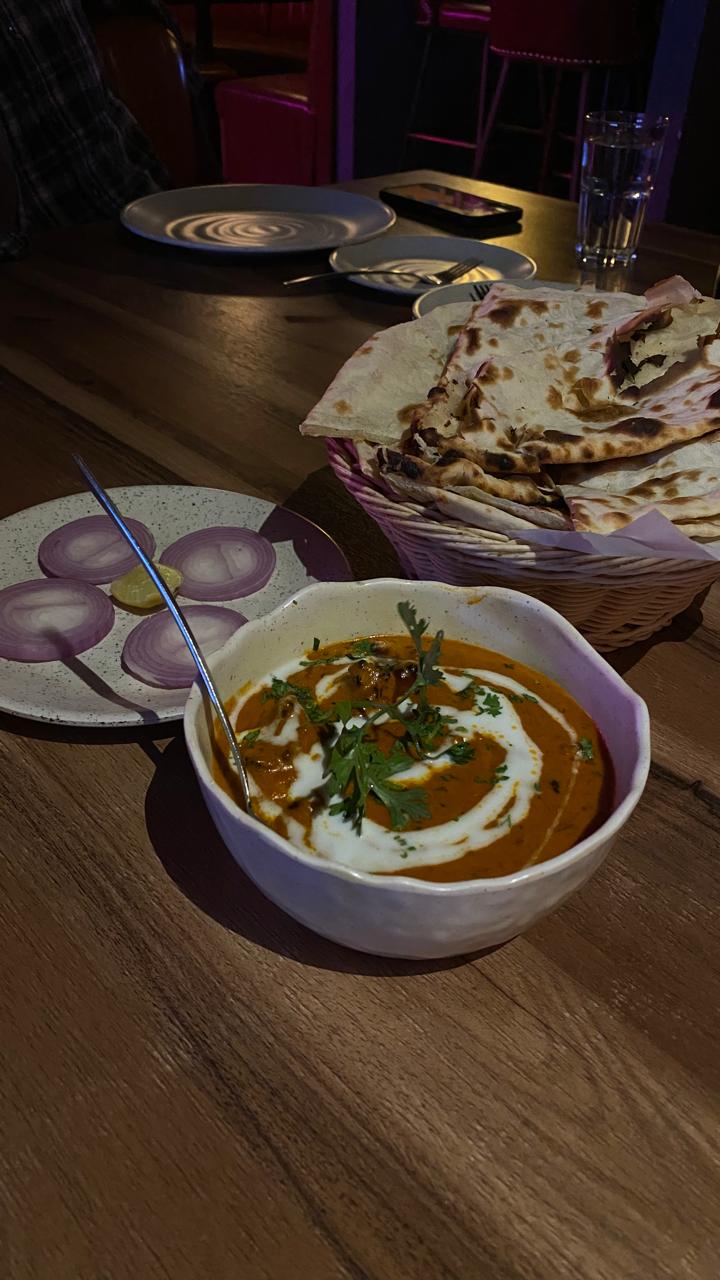
Naan suits butter chicken, chana masala and soft dal. Serve a manageable stack while another batch cooks rather than making every bread wait until the entire dough is finished; warm pliable bread is part of the eating experience.
Cool spare naan completely before enclosing it, then refrigerate or freeze in separated portions. Reheat briefly in a hot skillet or warm oven, adding a very light water mist if dry. Keep butter or garlic finishes for after reheating when possible, so the surfaces do not burn before the center warms.
An AI-assisted editorial guide, not independently kitchen-tested. The photograph is a serving example. How we prepare and correct our guides.
For safe handling, consult FDA guidance. Send recipe corrections by email to ZYS10.