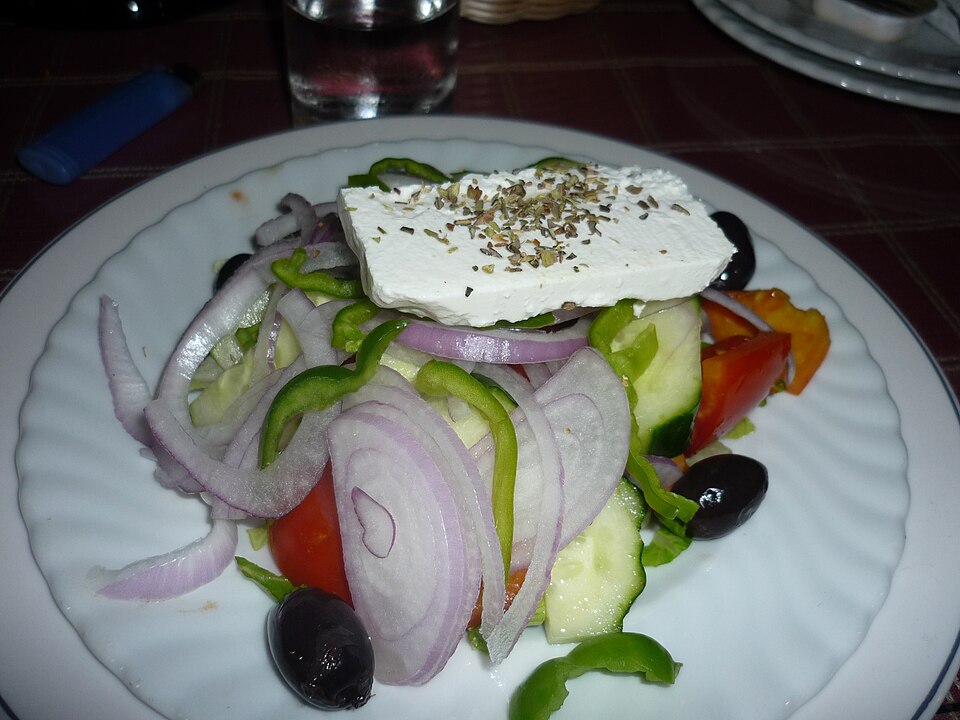
It does not need a complicated emulsified dressing or a pile of lettuce to feel complete. Choose ripe tomatoes first, then let olives, feta and oregano determine how much extra seasoning is actually needed.
Village-Style Greek Salad
Planning totals add preparation, cooking and listed waits. Overlapping stages may shorten the schedule; ingredient and equipment differences can lengthen it.
Ingredients
Times and base yield refer to the original recipe. Scaling quantities does not automatically change pan size, temperature or cooking time.
Step-by-step method
The steps describe the base batch (4 servings). The calculator changes the ingredient list only; amounts written in the steps, equipment and timing remain for that base batch.
Step 1
Cut tomatoes into generous wedges and cucumber into thick half-moons.
Step 2
Thinly slice pepper and onion, rinsing onion briefly if especially sharp.
Step 3
Place vegetables and olives in a broad bowl. Taste a piece of feta and an olive before deciding whether any extra salt is needed.
Step 4
Drizzle with olive oil and a little vinegar and turn gently once.
Step 5
Lay feta in a thick slice or large pieces over the vegetables.
Step 6
Sprinkle oregano and serve while the vegetables are fresh and crisp.
Why this version works
Buy vegetables for flavor and crispness
The 500 grams of tomatoes should be ripe enough to contribute both sweetness and juice. Cut into substantial wedges rather than tiny dice so they remain distinct while serving. A firm cucumber gives crunch; peel only as much as the skin needs, leaving some if it is tender. Green pepper brings a slightly bitter fresh note that balances sweet tomato. Thin onion slices distribute more pleasantly than thick raw chunks. If the onion is unusually sharp, a brief rinse and thorough drying can soften the bite without adding a large amount of water to the bowl.
Let feta and olives set the salt level
Feta and Kalamata olives vary greatly in salinity depending on brand and brine. Taste each before adding salt to the vegetables. The 180 grams of feta can be served as a thick slice or generous broken pieces, which keeps its creamy texture clearer than scattering fine dry crumbs over everything. Choose tangy brined cheese rather than assuming any white salad cheese behaves the same way. Remove olive stones if convenient, or tell diners they are present. A mouthful of vegetable, cheese and olive is a better seasoning test than tasting the plain tomato alone.
Use olive oil and tomato juice as the dressing
Four tablespoons of oil supply aroma and body across the whole salad, not a deep oil bath. Choose an extra-virgin oil that tastes fresh and pleasant. Drizzle it over the vegetables and turn gently once, allowing some tomato juice to mingle beneath. The tablespoon of red wine vinegar is adjustable: very acidic tomatoes may need less. Dried oregano gives a concentrated herbal accent, but an old dusty jar contributes little. Rub a small amount between your fingers before sprinkling to release aroma. A heavy sweet bottled dressing would obscure rather than improve these simple ingredients.
Assemble near serving and preserve the vegetable shape
Use a broad bowl or platter so the vegetables are not crushed under their own weight. Add cheese after the first gentle turn, and avoid repeatedly stirring it into paste. Salt and vinegar draw out moisture, so a long dressed rest changes the texture even when the ingredients were crisp at the start. Some flavorful juice at the bottom is welcome and can be enjoyed with bread; a large watery pool from poorly dried vegetables is different. This version has no lettuce, but it is one clear village-style approach rather than a claim that all Greek salads must be identical.
Keep the tomato juice in the dressing decision
Cut tomatoes over the serving bowl or retain their clean juices rather than discarding everything and replacing it with extra oil. Together with vinegar, that juice helps dress the vegetables. Taste after feta and olives are present before deciding on optional salt. If preparing vegetables ahead, hold the cucumber and tomato pieces separately from the final seasoning so the bowl does not become an unintended long marinade. Large feta pieces let diners combine briny cheese with a fresh vegetable bite instead of making every surface uniformly salty.
Ingredient choices and substitutions
Choose ripe fragrant tomatoes and feta with a clear tang rather than a bland crumbly salad cheese. Kalamata olives should be pleasantly briny. Dried oregano gives a concentrated aroma suited to the simple dressing.
Fixes for this recipe
| What you notice | Likely reason | What to do |
|---|---|---|
| The bowl becomes watery before eating. | Vegetables were wet, cut too finely or dressed too early. | Dry washed produce, use larger pieces and assemble near serving. Move the salad gently to a new platter if excess water overwhelms the flavored juices. |
| The salad tastes excessively salty. | Brined feta and olives were added after the vegetables had already been heavily salted. | Add more unsalted vegetables if available and reduce added salt next time. More vinegar may make the dish sharper without actually solving the salt concentration. |
| Feta turns into a chalky coating on everything. | A dry crumbly cheese was stirred repeatedly through the bowl. | Use a tangy brined feta in large pieces and place it on top after mixing vegetables. Gentle serving preserves the contrast between crisp produce and creamy cheese. |
Recipe-specific questions
Does this salad need lettuce?
Not in this version. Tomatoes, cucumber, pepper and onion provide the vegetable structure. Adding lettuce makes a different mixed salad and may require more dressing, so it should be an intentional variation.
Can I use pitted olives from a jar?
Yes. Choose olives that taste pleasantly briny rather than stale, drain them well and account for their salt. Pitted olives are convenient for serving even though some whole olives retain a firmer texture.
What if the tomatoes are out of season?
Look for a variety that genuinely tastes good, such as flavorful small tomatoes, and cut appropriately. If all available tomatoes are watery and pale, another salad may offer a better meal than trying to repair them with more cheese.
Serving and storage
Bread catches the olive-oil and tomato juices. The salad also complements souvlaki, beans or baked vegetables, giving a fresh acidic contrast without needing an additional rich dressing.
Keep cut vegetables, feta and dressing separate if preparing ahead. Refrigerate and combine near serving. Once dressed, the tomato and cucumber soften and release more water, so make a practical amount and use leftover vegetables in a different preparation rather than promising the original crispness later.
An AI-assisted editorial guide, not independently kitchen-tested. The photograph is a serving example. How we prepare and correct our guides.
For safe handling, consult FDA guidance. Send recipe corrections by email to ZYS10.