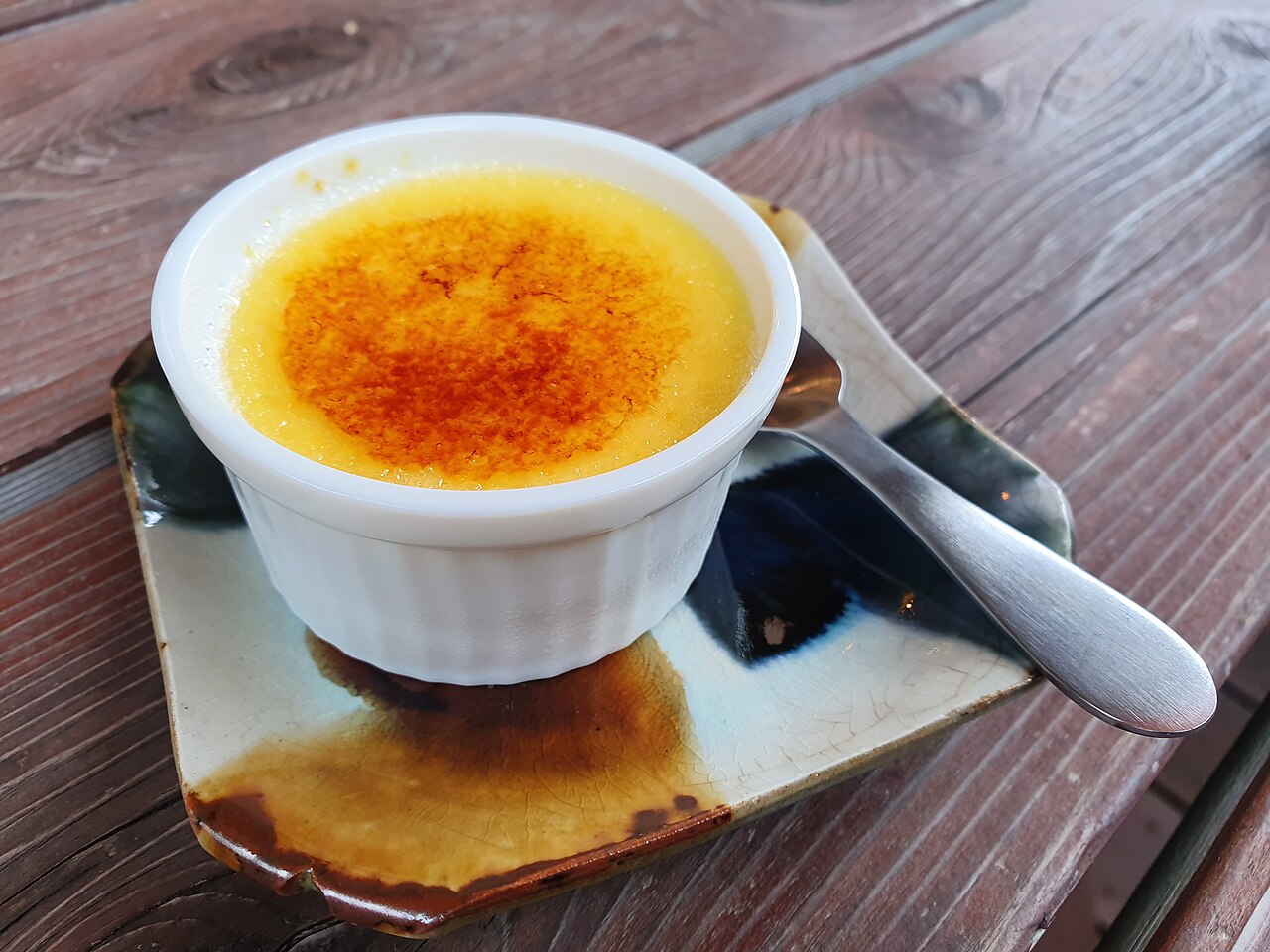
The most important decisions happen before the torch appears. Choose shallow dishes, moderate the baking heat with a water bath and chill long enough that the center is fully cold before adding sugar.
Vanilla Crème Brûlée
Plus at least 4 hours chilling
Planning totals add preparation, cooking and listed waits. Overlapping stages may shorten the schedule; ingredient and equipment differences can lengthen it.
Ingredients
For fractional eggs, beat an extra egg or yolk and measure the required fraction.
Times and base yield refer to the original recipe. Scaling quantities does not automatically change pan size, temperature or cooking time.
Step-by-step method
The steps describe the base batch (4 servings). The calculator changes the ingredient list only; amounts written in the steps, equipment and timing remain for that base batch.
Step 1
Warm cream and vanilla until steaming but not boiling.
Step 2
Whisk yolks with caster sugar just until combined, avoiding excessive foam.
Step 3
Pour warm cream into yolks gradually while stirring, then strain.
Step 4
Divide among four ramekins and place in a roasting tin with hot water reaching halfway up their sides.
Step 5
Bake at 150°C / 302°F for 30–40 minutes until edges set and centers wobble gently, then cool and refrigerate for at least 4 hours.
Step 6
Sprinkle each cold custard with a thin even sugar layer and caramelize carefully with a kitchen torch.
Why this version works
Match ramekin shape to the custard depth
The mixture makes four portions, but ramekin capacity and shape change the baking behavior. Wide shallow dishes create more crust per spoonful and a shorter distance for heat to reach the center. Deep cups can have firmly set edges while the middle remains liquid. Aim for a similar custard depth across all four dishes rather than filling mismatched containers to their rims. Use heatproof ramekins that can tolerate both the water bath and a brief torch finish. Place them in the roasting tin before pouring hot water so you are not moving individual cups through a filled bath.
Combine eggs and cream without building foam
Whisk yolks and sugar only until smooth, not into a large pale airy mousse. Foam becomes bubbles on the custard surface and can interfere with an even sugar crust. Add the hot cream gradually while stirring so no pocket of yolk is exposed abruptly to all the heat. Strain the mixture into a jug for easier pouring and let surface bubbles settle or remove them gently. Vanilla extract is convenient; a split vanilla pod can infuse the warm cream if available. Avoid adding more sugar simply because unsweetened warm cream tastes less intense than a finished cold dessert.
Bake to a cohesive wobble
Hot water halfway up the sides reduces abrupt heat at the custard edges. It should surround the dishes without sloshing into them. At the suggested 150°C / 302°F setting, begin checking before the upper end of the time range. Move the tin gently: the middle should tremble as a soft mass while the perimeter stays set. Freely moving liquid needs more cooking, but a rigid puffed center suggests you have gone too far. Lift ramekins from the bath once ready so the hot water does not keep cooking them unnecessarily. Cool sensibly, then refrigerate for the full chilling period.
Make a thin crust rather than a thick sugar lid
Dry any condensation from the chilled surface carefully. Scatter a small even sugar layer and rotate the ramekin to distribute it, tipping away a thick excess before torching. Keep the flame moving and caramelize gradually rather than burning one dark spot while other areas remain white. A second very thin pass can be easier to control than a single heavy mound. Let the caramel cool briefly into a brittle film before serving. Torching far ahead allows moisture from the custard to soften the shell, so keep the last stage close to eating.
Divide custard by depth rather than decoration
Four ramekins should have similar filled depth so they reach their gentle set at comparable times. A wide shallow dish creates more sugar-crust area per spoonful, while a deeper cup changes the relationship between topping and cream. If using mixed containers, check and remove each individually rather than waiting for every center to match. Cool and chill the custards before adding crust sugar. A thicker sugar layer is not a substitute for a dry surface; it creates a harder lid and requires more heating above a delicate chilled filling.
Ingredient choices and substitutions
Buy unsweetened rich cream and compare the fat percentage on the carton. US heavy cream gives a lighter custard than UK double cream but is suitable for a deliberate variation; coffee creamer is not a direct substitute. Use four shallow ramekins of similar capacity and fine dry sugar for an even surface crust, rather than coarse damp crystals that melt irregularly.
Fixes for this recipe
| What you notice | Likely reason | What to do |
|---|---|---|
| The custard has a grainy curdled edge. | Heat was too strong or baking continued beyond the set point. | For the next batch, use a proper water bath and check earlier. Straining before baking removes small mixing defects but cannot reverse a custard that curdled in the oven. |
| Sugar melts into syrup rather than a crisp layer. | The surface is wet, the custard is insufficiently chilled or the crust was made too early. | Chill completely, blot condensation and torch shortly before serving. Do not add a thicker sugar mound to compensate for a damp surface. |
| The top is black in spots and white elsewhere. | The torch stayed still or the sugar layer was uneven. | Move the flame continuously and rotate the dish. Use fine dry sugar in a thin layer so every area can melt before the first area burns. |
Recipe-specific questions
Can I replace cream with all milk?
Not without changing the recipe's set and richness. Milk contains a different balance of fat and water. A lighter custard needs its own adjusted formulation rather than a promise that the same yolks and baking time will behave identically.
Can I caramelize under a grill instead of using a torch?
Only with suitable heatproof dishes and close supervision. A grill heats a wider area and can warm the custard more, so the cold-center contrast is harder to preserve. Chill thoroughly and keep the exposure brief.
Why are the whites not included?
Yolks give richness and a softer custard structure. Whole eggs would create a different set and flavor. Save whites separately for another cooked preparation rather than adding them to avoid leftovers.
Serving and storage
A small portion is rich enough on its own. Fresh tart berries provide a useful contrast without needing another sweet sauce poured over the brittle caramel.
Make the custards ahead without their sugar crust, keep them covered in the refrigerator after cooling and finish individually before serving. Avoid freezing as a routine shortcut because thawing can change the smooth texture. Keep raw-yolk utensils away from the final chilled dessert.
An AI-assisted editorial guide, not independently kitchen-tested. The photograph is a serving example. How we prepare and correct our guides.
For safe handling, consult FDA guidance. Send recipe corrections by email to ZYS10.