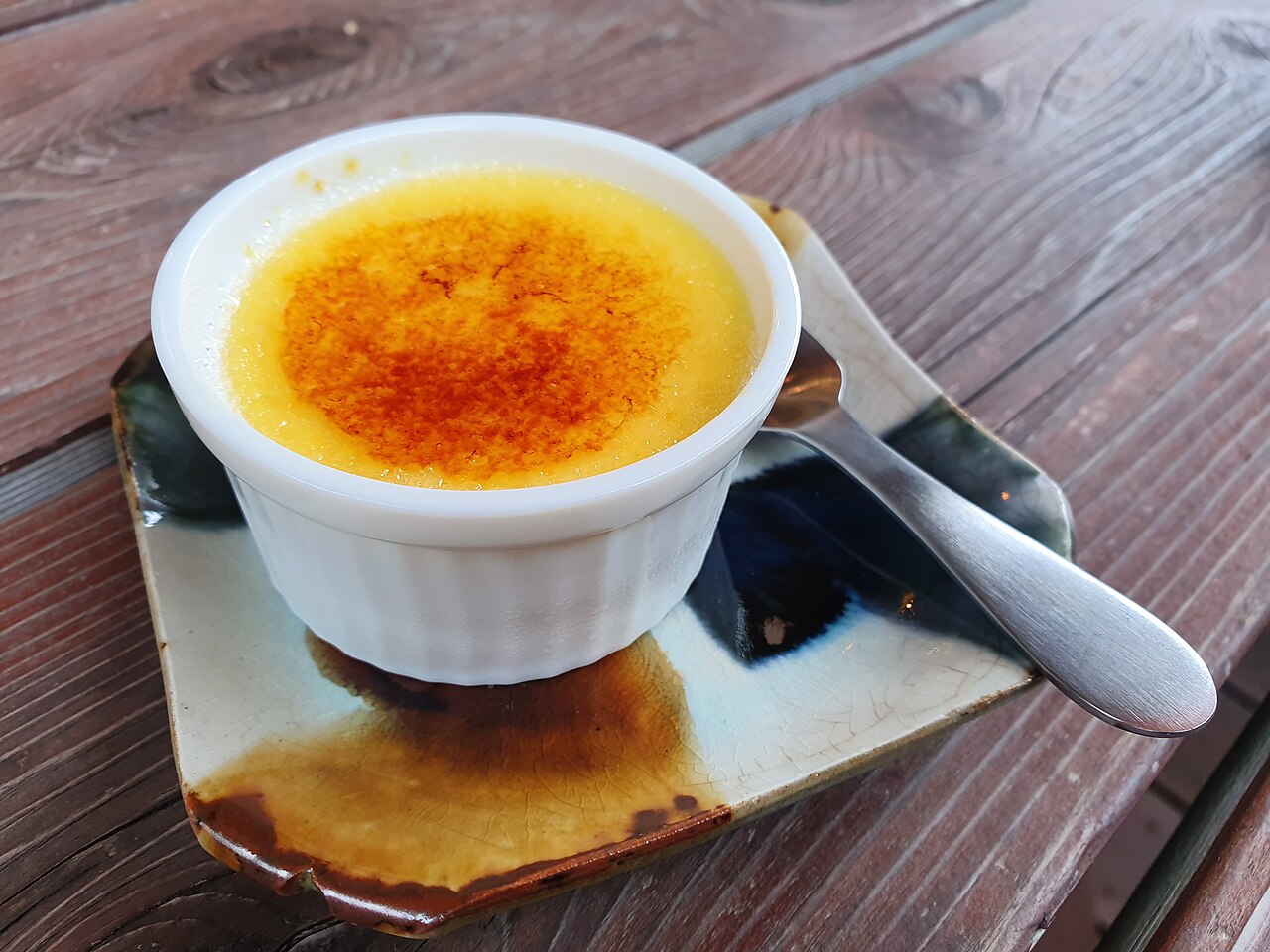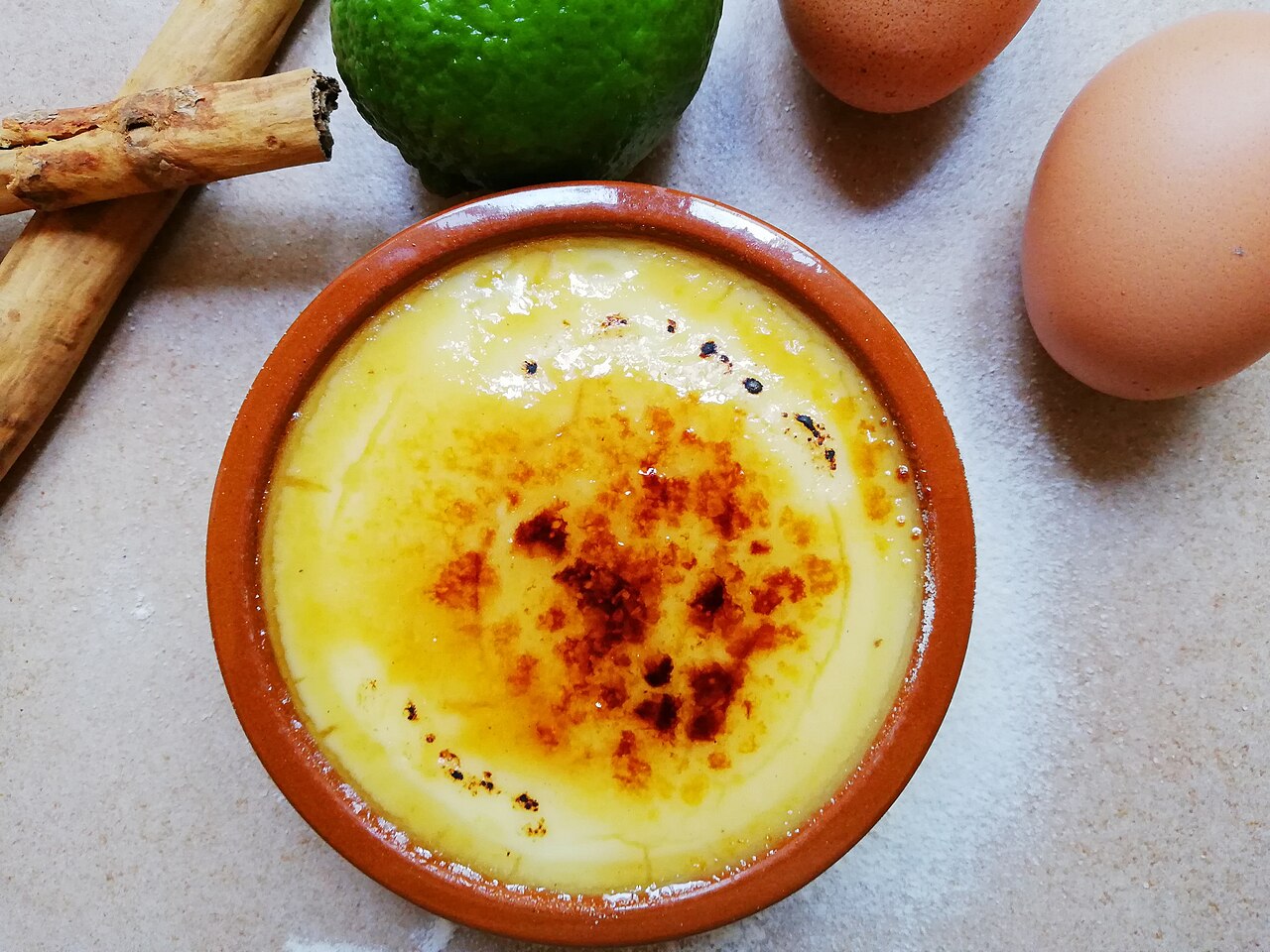
It differs from a baked cream custard, so it should not be cooked by waiting for an oven wobble. Smooth thickening, complete chilling and a thin freshly caramelized top are the main controls.
Citrus Crema Catalana
Plus infusing and chilling
Planning totals add preparation, cooking and listed waits. Overlapping stages may shorten the schedule; ingredient and equipment differences can lengthen it.
Ingredients
For fractional eggs, beat an extra egg or yolk and measure the required fraction.
Times and base yield refer to the original recipe. Scaling quantities does not automatically change pan size, temperature or cooking time.
Step-by-step method
The steps describe the base batch (4 servings). The calculator changes the ingredient list only; amounts written in the steps, equipment and timing remain for that base batch.
Step 1
Warm milk with cinnamon and citrus zest, then take off the heat and infuse for 15 minutes.
Step 2
Whisk yolks, caster sugar and cornstarch until smooth.
Step 3
Strain the warm milk into the yolk mixture gradually while whisking.
Step 4
Return to a low heat and stir continuously until thick and just beginning to bubble gently.
Step 5
Divide among shallow heatproof dishes, cool and refrigerate for at least 4 hours.
Step 6
Add a thin sugar layer and caramelize carefully with a kitchen torch just before serving.
Why this version works
Infuse clean citrus flavor without the bitter pith
Take narrow strips of the colored outer peel from washed lemon and orange, avoiding as much white pith as possible. The pith can add bitterness that becomes distracting in a delicate milk base. Warm the milk with peel and a cinnamon stick until steaming, then let it stand off the heat for the stated infusion. A long hard boil reduces the milk and changes the ratio before the custard is mixed. Strain out the aromatics before combining with yolks. Ground cinnamon can leave specks and a stronger dusty note, so it is not a completely neutral substitute for the stick.
Disperse starch before the mixture meets the heat
Whisk the 25 grams of cornflour with yolks and sugar until no dry pockets remain. In some markets this thickener is labeled cornstarch, which is different from finely ground yellow cornmeal. Add warm infused milk gradually while whisking so the yolks are tempered rather than hit by all the heat at once. Return the mixture to a saucepan only when smooth. A silicone spatula or whisk should reach the corners where thick custard catches first. Do not sprinkle dry starch into an already hot thickening pot, where it can form stubborn gelatinous lumps.
Cook the starch-thickened custard deliberately
This mixture must thicken on the hob and reach the gentle bubbling stage specified so the starch cooks, while continuous stirring protects the egg-rich base. Use low to moderate heat rather than a fierce burner. The first sign of thickness is not always the final endpoint: stir until the custard is smooth, cohesive and no longer has a raw starchy impression. Avoid an extended rolling boil that scorches the base or damages the texture. If small lumps appear, strain promptly while still warm. Divide into shallow heatproof dishes so the portions cool evenly and provide a generous but manageable caramel surface.
Chill fully before adding the brittle finish
Allow the filled dishes to cool sensibly, then refrigerate for at least four hours. The cold custard should hold a spoonful cleanly without becoming a rubbery solid. Blot condensation if present before sprinkling a thin even layer of fine sugar. Use a kitchen torch in continuous movement, rotating the dish rather than holding the flame on one patch. Let the caramel cool briefly to harden before serving. Making the crust hours ahead lets moisture soften it, so keep that stage close to eating. Heatproof dishes and a clear work area matter even though the dessert beneath the flame is cold.
Keep the two sugar allowances separate until serving
The caster sugar belongs in the milk-and-yolk custard, while the topping sugar stays dry until the chilled portions are ready to caramelize. Do not add the topping allowance to the custard because it seems too small to reserve. Remove the citrus strips and cinnamon when straining so the set cream is smooth rather than interrupted by hard pieces. If using different-sized dishes, divide by filled depth and check chilling across them. A thin even crust should break comfortably with a spoon; a thick sugar cap can dominate the gentler milk-based custard beneath.
Ingredient choices and substitutions
Use whole milk and unwaxed citrus if possible, washing it well. Take only the colored zest because white pith can taste bitter. Fine sugar melts evenly when making a thin crust.
Fixes for this recipe
| What you notice | Likely reason | What to do |
|---|---|---|
| Custard contains gelatinous starch lumps. | Cornflour was not dispersed before hot liquid entered. | Whisk the cold yolk-sugar-starch mixture thoroughly first and add milk gradually. Strain a warm slightly lumpy batch, but do not expect large cooked lumps to disappear simply through chilling. |
| The base tastes scorched. | Thick custard sat against a hot pan without enough movement. | Stop scraping the burnt base into the mixture. Transfer unscorched custard if possible and use gentler heat with a utensil that reaches the corners next time. |
| The caramel becomes sticky rather than crisp. | The surface was damp or the top was made too far ahead. | Chill fully, blot condensation and torch a thin layer immediately before serving. A thick extra sugar cap does not solve moisture underneath. |
Recipe-specific questions
Is crema catalana the same as crème brûlée?
Not in these recipes. This custard uses milk and starch and is thickened on the stove; the crème brûlée uses cream and a water-bath bake. Their methods and texture controls should not be swapped casually.
Can I use bottled citrus juice instead of peel?
Juice adds acidity and liquid rather than the peel's aromatic oils. It is not an equivalent infusion. If fresh peel is unavailable, omit or adapt the fragrance honestly rather than pouring acid into the milk base.
Why use shallow dishes?
They chill more evenly and give a balanced amount of caramel in each spoonful. A deep cup can make the sugar top feel like a separate lid above a large mass of custard.
Serving and storage
Serve in small portions with fresh citrus segments or a few tart berries if desired. Avoid pouring a wet fruit sauce over the crisp top, where it quickly dissolves the caramel contrast.
Refrigerate covered custards without their sugar topping, then finish individual portions before serving. Keep raw-yolk equipment separate from the chilled dessert and avoid repeatedly warming the dishes while preparing other components. Freezing is not a reliable route to preserving the original smooth texture.
An AI-assisted editorial guide, not independently kitchen-tested. The photograph is a serving example. How we prepare and correct our guides.
For safe handling, consult FDA guidance. Send recipe corrections by email to ZYS10.