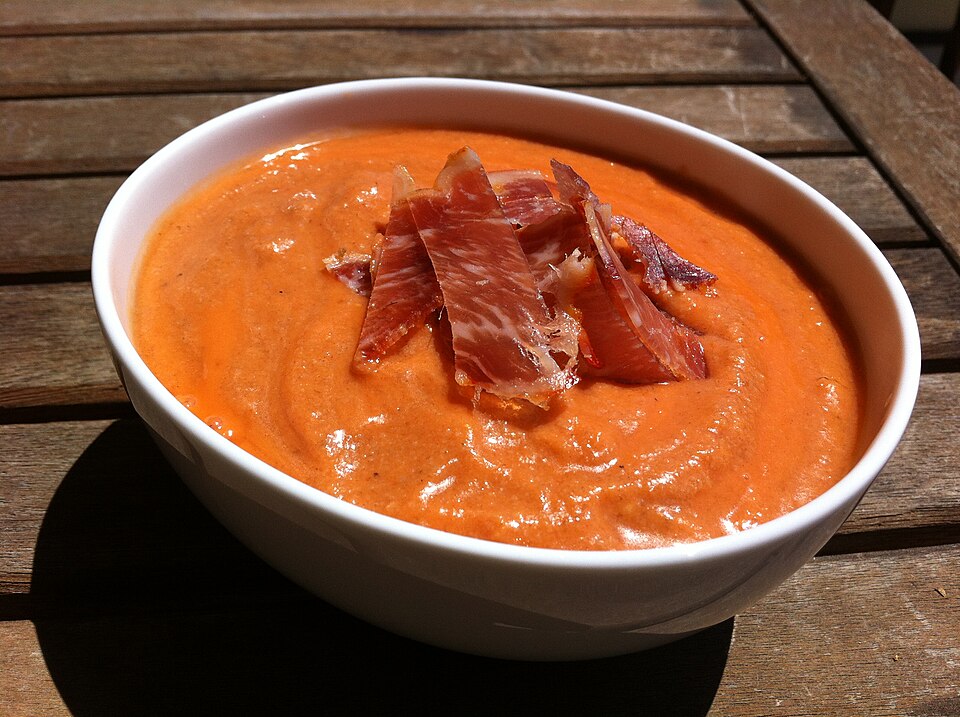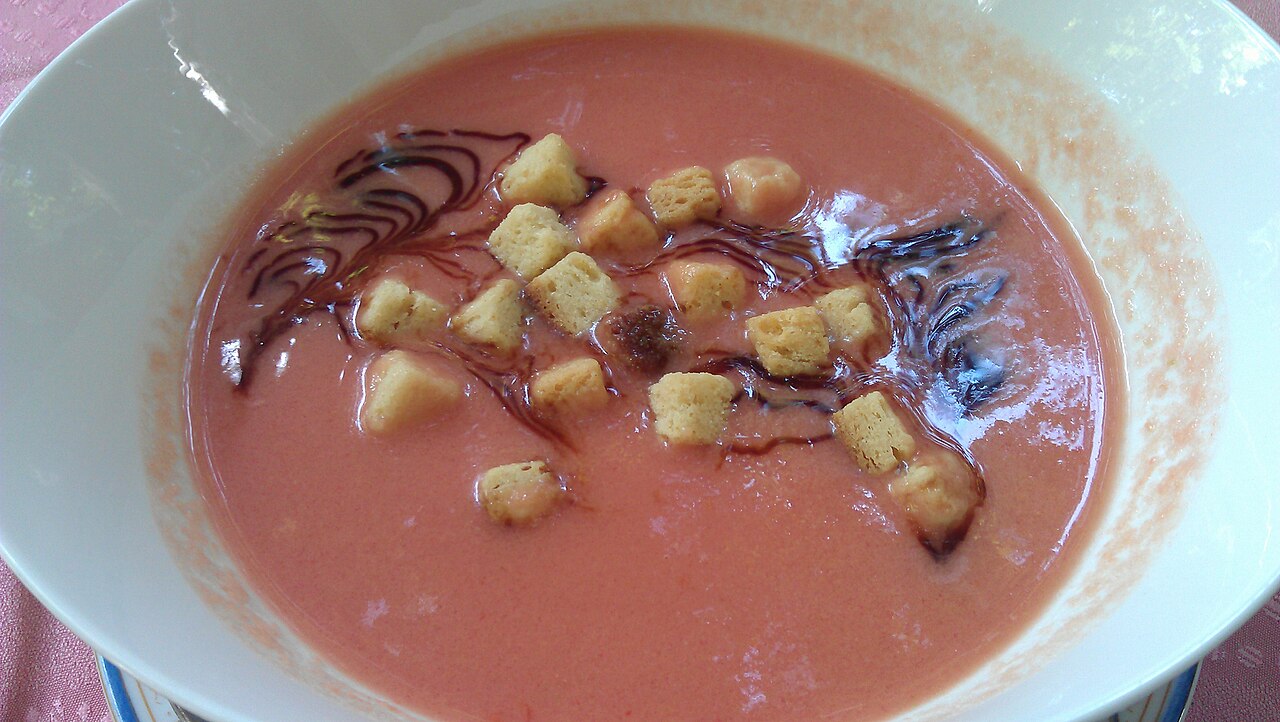
This chilled version uses ripe tomatoes, cucumber, pepper, a little bread and olive oil to make a smooth but drinkable soup. Season it once while blending and again after chilling, when its acidity, salt and garlic will be perceived differently.
Chilled Tomato Gazpacho
Plus at least 2 hours chilling
Planning totals add preparation, cooking and listed waits. Overlapping stages may shorten the schedule; ingredient and equipment differences can lengthen it.
Ingredients
Times and base yield refer to the original recipe. Scaling quantities does not automatically change pan size, temperature or cooking time.
Step-by-step method
The steps describe the base batch (4 servings). The calculator changes the ingredient list only; amounts written in the steps, equipment and timing remain for that base batch.
Step 1
Soak bread briefly in cold water and squeeze lightly.
Step 2
Roughly chop tomatoes, peeled cucumber and seeded pepper.
Step 3
Blend vegetables, bread, garlic, vinegar and salt until very smooth.
Step 4
With the blender running slowly, add olive oil to create a cohesive texture.
Step 5
Strain if a finer finish is desired and adjust thickness with cold water.
Step 6
Chill for at least 2 hours, then taste again and serve with finely diced vegetables.
Why this version works
Choose ripe tomatoes before thinking about garnish
For the 900 grams of tomatoes, fragrance and flavor matter more than a perfectly unblemished shape. Trim damaged areas, remove tough stem cores and taste a piece before committing the whole batch. A pale watery tomato will produce a pale watery soup even if the final bowl is decorated beautifully. In-season local fruit is often more useful than an expensive imported label. The cucumber should be firm and the pepper crisp. If the cucumber has large watery seeds, remove them. Start with the small garlic clove listed; raw garlic can become more noticeable during the refrigerator rest.
Use bread and oil to create body without cream
The bread is not a bulky garnish but part of the soup's texture. Soak it briefly and squeeze lightly so it blends without dry fragments, then process it thoroughly with the vegetables. Olive oil added gradually helps create a more cohesive mouthfeel. Use an oil whose flavor you enjoy on its own: very bitter or stale oil becomes obvious in a cold uncooked soup. Do not pour in additional oil simply because the mixture looks thin. Tomato water, bread quantity and blending time all influence body, and extra fat can make the flavor heavy without solving poor vegetable quality.
Adjust water after blending rather than automatically
The listed cold water is a maximum starting allowance, not a command to dilute every batch equally. Very juicy tomatoes may need little or none. Blend first, inspect the consistency and add water in small amounts until the soup pours or spoons as intended. A powerful blender can produce a fine texture without straining, while a less powerful model may leave skin or seed fragments. Pass through a sieve if desired, understanding that you remove some solids and may need less additional water. The finished soup should feel light and refreshing, not like tomato-flavored ice water.
Chill before making the last seasoning decision
At least two hours in the refrigerator lets the soup cool fully and the flavors combine. Taste it cold in a small glass or bowl, then adjust salt and sherry vinegar gradually. Do not assume a warm blender sample gives the final balance. If garlic dominates, more tomato and vegetable mixture is a better correction than sugar. Prepare finely diced garnish separately so it remains crisp and does not complicate the smooth base. Serve in modest portions and stir the chilled soup gently before pouring if natural separation has occurred during storage.
Use the cold-water allowance as an adjustment budget
The tomatoes and cucumber already supply substantial liquid, so the measured water is available to tune texture after blending rather than an obligation to empty the jug. Count any water retained in soaked bread as part of the practical moisture picture. Blend the vegetables thoroughly before deciding the soup needs dilution, then chill and taste again before the last vinegar adjustment. A cold glassful and a spoonable starter can have different preferred consistencies. Choose the serving style deliberately instead of alternating extra bread and extra water until the original tomato flavor becomes muted.
Ingredient choices and substitutions
Choose fragrant ripe tomatoes. Good canned tomatoes are useful elsewhere but produce a different chilled flavor here. A small fresh garlic clove is enough, and sherry vinegar brings a rounded acidic note.
Fixes for this recipe
| What you notice | Likely reason | What to do |
|---|---|---|
| The soup is watery despite enough bread. | Too much water was added before the tomato moisture was assessed. | Blend in a little more ripe tomato and soaked bread if available. Next time reserve most added water until the texture is established. |
| The garlic feels harsh and overpowering. | A large or especially strong clove was used, then intensified during chilling. | Dilute with more of the vegetable base rather than adding sugar. Begin future batches with less garlic and allow the cold rest before deciding whether more is needed. |
| The texture feels coarse or fibrous. | Skin, seeds and pepper fragments did not break down fully. | Blend longer in suitable small batches and strain if needed. Stop and cool the blender if the appliance warms excessively rather than heating the soup through prolonged processing. |
Recipe-specific questions
Can I use canned tomatoes for this version?
They produce a different cooked-tomato flavor. This recipe is designed around ripe raw tomatoes, so canned tomatoes are not an equivalent substitution. A separate chilled tomato soup may be more honest than claiming an identical gazpacho.
Is peeling every tomato necessary?
Not if the blender makes a fine puree or the soup is strained. Removing tough cores is still useful. Peeling can help a weaker blender, but it adds work without automatically improving a powerful blender's result.
How does this differ from salmorejo?
This version includes cucumber and pepper and is lighter in body. Salmorejo uses a more concentrated tomato-bread-oil structure and is deliberately thicker. The two soups should not be presented as merely different names for one formula.
Serving and storage
Serve with a small tomato toast, a simple sandwich or grilled vegetables. A crunchy diced garnish adds contrast, but too many toppings can hide the soup's clean chilled texture.
Keep gazpacho covered in the refrigerator and stir before serving. Store garnish separately. Make a practical quantity for prompt use rather than leaving a large jug warming repeatedly on the table. If taking it outdoors, transport chilled and pour smaller batches as needed.
An AI-assisted editorial guide, not independently kitchen-tested. The photograph is a serving example. How we prepare and correct our guides.
For safe handling, consult FDA guidance. Send recipe corrections by email to ZYS10.