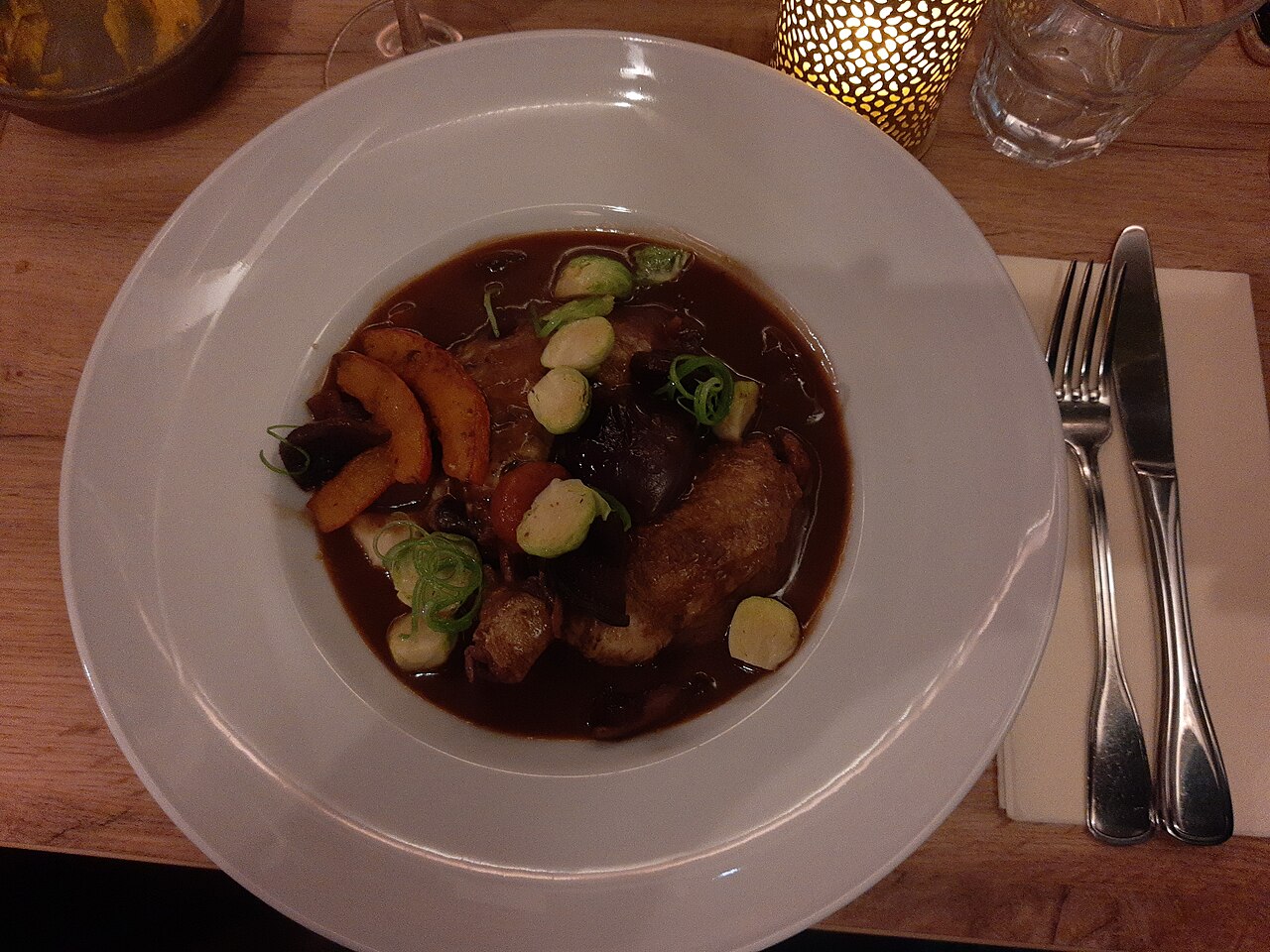
The beef needs time to become tender; the sauce may need a separate finish. Organizing those stages, and keeping mushrooms out of the long braise, produces a more defined result than cooking every ingredient together from the beginning.
Slow-Braised Beef Bourguignon
Planning totals add preparation, cooking and listed waits. Overlapping stages may shorten the schedule; ingredient and equipment differences can lengthen it.
Ingredients
Times and base yield refer to the original recipe. Scaling quantities does not automatically change pan size, temperature or cooking time.
Step-by-step method
The steps describe the base batch (4 servings). The calculator changes the ingredient list only; amounts written in the steps, equipment and timing remain for that base batch.
Step 1
Dry beef well and brown in batches in 1 tablespoon of the oil in a heavy casserole, then remove. Keep the other tablespoon for the mushrooms.
Step 2
Cook bacon, carrots and shallots, add garlic and stir in flour.
Step 3
Pour in wine and stock and scrape up the browned bits.
Step 4
Return beef with thyme and bay, cover and braise at 160°C / 320°F for 2.5–3 hours until fork-tender.
Step 5
Brown mushrooms separately in the reserved tablespoon of oil and add for the final 20 minutes.
Step 6
Remove herbs, skim excess fat and reduce the sauce gently if it is too thin.
Why this version works
Buy chuck for its cooking behavior
For the kilogram of beef, ask for chuck or another cut suited to slow moist cooking, and cut it into substantial pieces around four centimeters wide. Very small cubes lose their identity before the sauce develops; enormous pieces make timing less even. Look for fine marbling and some connective tissue rather than a completely lean steak cut. The connective tissue gradually softens, while the fibers themselves can still dry if cooked violently. A heavy covered casserole around 24–26 centimeters across generally provides a practical balance of surface area and depth for this quantity.
Brown in batches and judge the pot base
Dry beef surfaces with paper or a clean towel immediately before searing. If water pools in the pot, remove some pieces and let the pan recover instead of endlessly stirring them in gray liquid. Turn once a brown surface has developed, and transfer the batch out before beginning the next. Cook the bacon and vegetables after the main browning so small pieces do not burn beneath repeated meat batches. Flour should lose its raw dusty appearance before wine enters. Scrape brown deposits into the liquid, but discard black scorched residue rather than incorporating it.
Keep the braise quiet and the liquid sufficient
At the suggested 160°C / 320°F oven setting, the covered liquid should barely move around the meat. Oven calibration, pot material and lid fit alter that behavior, so check early rather than assuming the dial guarantees a gentle braise. The beef need not swim in an unlimited volume of stock, but the pan must not dry before tenderness develops. Add hot unsalted stock if evaporation is excessive. Begin testing a piece near the lower end of the stated time: it should yield to a fork without needing to be crushed. A firm piece needs more gentle time, not a harder boil.
Reduce after tenderness, then preserve the mushrooms
Brown mushrooms in a separate skillet with enough space to evaporate their own moisture. Halves or quarters give recognizable bites; tiny thin slices disappear into a long sauce. When the beef is ready, lift it out if the sauce still needs reducing. Concentrate that liquid with the lid off, tasting for salt as it thickens, then return beef and mushrooms briefly. Wine is a major ingredient here, so choose a dry balanced bottle. A stock-only adaptation is possible, but it should be described honestly and not presented as identical or as wine made alcohol-free through a fixed cooking time.
Reduce the sauce after checking each cut of beef
Beef pieces can become tender at slightly different times even when their weights look similar. Check more than one piece before treating the whole casserole as finished. If most are ready but the sauce needs concentration, transfer the tender beef to a clean covered dish while reducing the liquid gently. Return it afterward rather than simmering the meat hard to hurry the sauce. Taste once the mushrooms and bacon are present, because both affect the final mouthful. A thicker sauce is not automatically a better sauce if reduction has made its seasoning harsh.
Ingredient choices and substitutions
Choose beef chuck with visible marbling and cut pieces of similar size. A moderate dry red wine is suitable. For diners avoiding alcohol, use extra stock with a carefully measured acidic accent and describe the variation honestly.
Fixes for this recipe
| What you notice | Likely reason | What to do |
|---|---|---|
| Beef remains chewy after the suggested time. | The cut or piece size needs longer for connective tissue to soften. | Check that liquid remains, cover and continue at a quiet braise. Test another piece later rather than increasing to a rolling boil. |
| The sauce is thick but the meat is not ready. | The pot lost liquid faster than expected. | Add hot unsalted stock and improve the lid seal. A tightly reduced sauce cannot support the remaining cooking time without catching on the base. |
| The finished sauce feels greasy. | Rendered bacon and beef fat remained on the surface. | Let the pot settle and skim the excess, or chill a safely cooled make-ahead batch and remove the firm surface fat. Keep some richness rather than stripping the sauce completely. |
Recipe-specific questions
Can I use a lean steak to shorten the cooking?
That changes the method rather than simply improving the cut. Lean steak can dry during the long braise, and the sauce loses some body. Use a braising cut and plan sufficient time for this version.
Must the wine come from Burgundy?
No. A balanced dry red wine is more useful than an expensive origin chosen only for its name. Avoid a bottle that tastes unpleasantly sweet, harsh or oxidized before it enters the pot.
Why cook the mushrooms separately?
Their own water otherwise joins the braise and their texture becomes uniformly soft. Separate browning creates a roasted note and lets you add them when the beef, rather than the mushrooms, is nearly ready.
Serving and storage
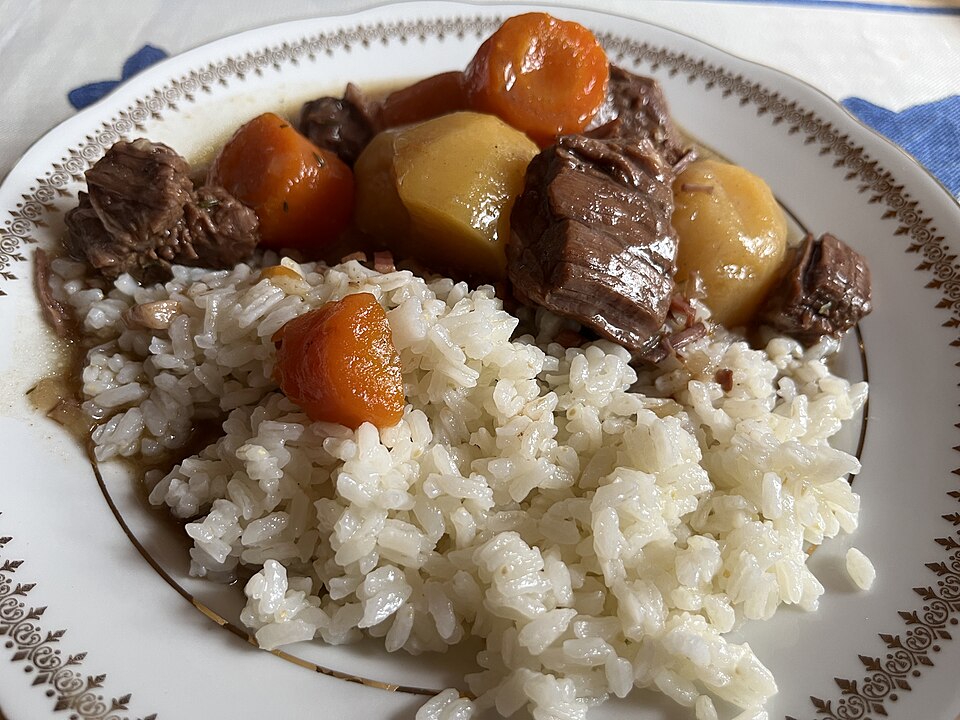
Mashed potato or plain buttered noodles provide a soft base for the sauce. Add steamed green vegetables for contrast and avoid competing with another heavily reduced meat sauce.
Cool portions in shallow containers and refrigerate promptly. For reheating, warm the beef gently in its sauce until thoroughly hot, adding a little stock if the sauce has set thickly. Avoid repeated reheating of the entire casserole; take only the portion needed.
An AI-assisted editorial guide, not independently kitchen-tested. The photograph is a serving example. How we prepare and correct our guides.
For safe handling, consult FDA guidance. Send recipe corrections by email to ZYS10.