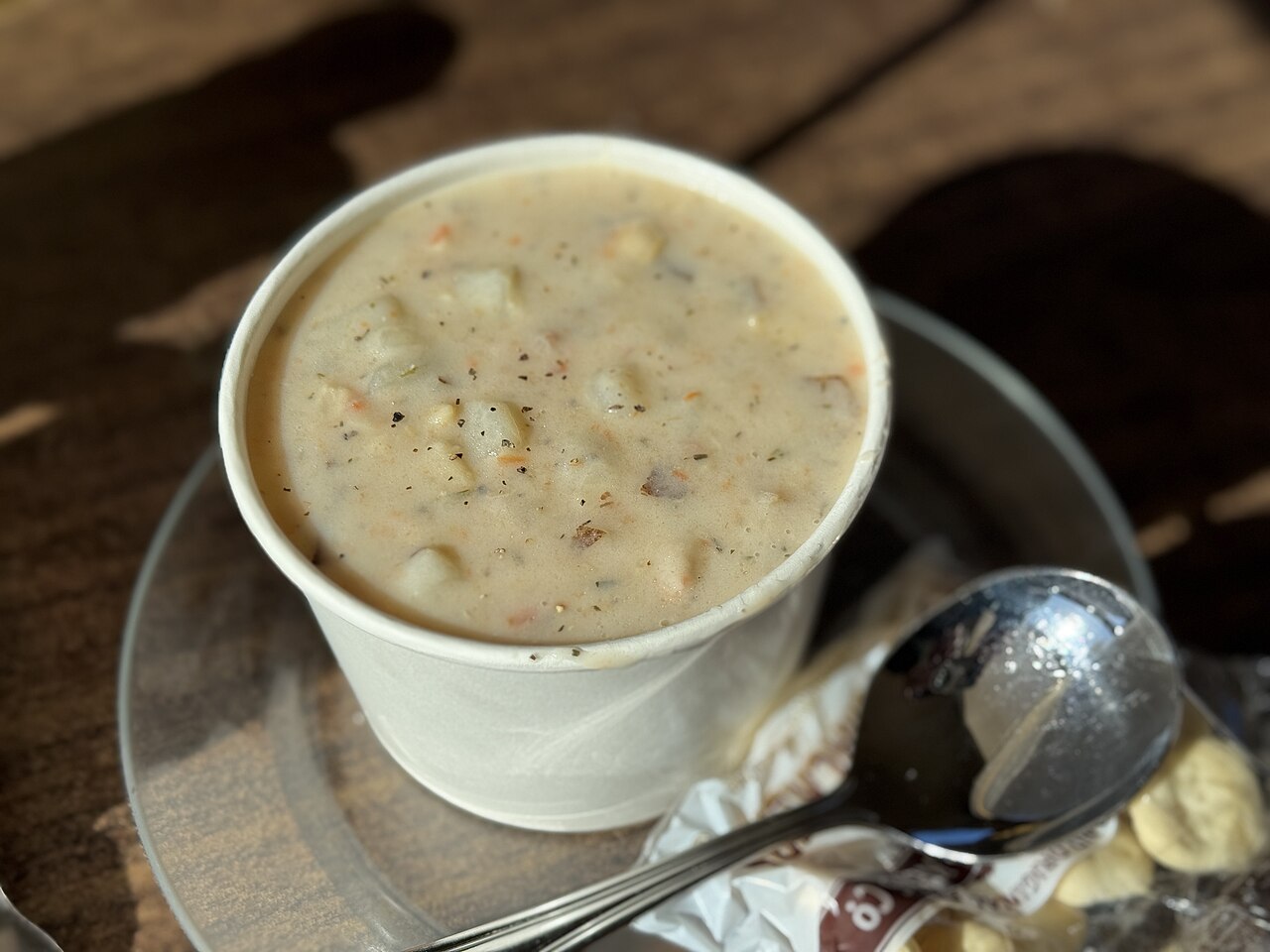
The potatoes should remain visible pieces and the clams should stay tender. Because this recipe starts with already cooked shelled clams, they join at the end rather than simmering through the entire potato-cooking stage.
New England-Style Clam Chowder
Planning totals add preparation, cooking and listed waits. Overlapping stages may shorten the schedule; ingredient and equipment differences can lengthen it.
Ingredients
Times and base yield refer to the original recipe. Scaling quantities does not automatically change pan size, temperature or cooking time.
Step-by-step method
The steps describe the base batch (4 servings). The calculator changes the ingredient list only; amounts written in the steps, equipment and timing remain for that base batch.
Step 1
Cook diced bacon until lightly crisp and remove some for garnish.
Step 2
Soften onion and celery in the bacon fat and butter.
Step 3
Stir in flour for one minute, then gradually add clam juice and milk.
Step 4
Add potatoes and bay leaf and simmer gently until the potatoes are tender.
Step 5
Stir in cooked clams and cream and warm through without a hard boil.
Step 6
Remove bay, taste before salting and garnish with bacon and black pepper.
Why this version works
Treat clam juice as a seasoned ingredient
Taste the liquid before it enters the pot, provided it is a ready-to-use cooked or bottled product. Canned and bottled clam juices vary in salinity, so the 300 ml can contribute much of the final salt. If steaming fresh clams separately, strain their liquid through a fine filter to remove grit. Keep raw seafood handling separate from the finished soup. A strong pleasant marine aroma is useful; a stale or questionable shellfish smell is a reason not to use the product.
Use the bacon as an accent
Cook the diced bacon until it releases some fat and lightly crisps, then reserve part for the finish. Onion and celery soften in that base, carrying the bacon flavor through the broth. Do not let the vegetables brown aggressively: this chowder is meant to have a pale creamy base rather than a roasted dark sauce. The measured butter supports the roux, but a very fatty bacon may leave excess rendered fat that can be poured off before proceeding.
The potatoes determine much of the texture
Cut the potatoes into even bite-size cubes, roughly 1.5 cm, so one piece is not hard while another dissolves. Waxy varieties hold their shape better; a floury potato may thicken the broth more as its edges break down. Test a cube directly before adding the clams. If the broth is thickening faster than the potatoes soften, add a little hot milk or unsalted liquid and keep the simmer gentle rather than scraping a dense mixture over high heat.
Keep dairy warm rather than fiercely boiling
Whisk the milk in gradually after the flour has cooked briefly. A quiet simmer gives starch time to thicken without reducing the liquid too quickly. Add cream near the finish for richness instead of boiling it for the whole cooking time. The chowder should flow from a ladle with visible potato pieces, not hold a rigid spoon trail like wallpaper paste. Remember that it thickens further as it cools in the bowl.
Warm the clams only as much as needed
Cooked clams can become firm and rubbery during repeated boiling. Fold them in after the potatoes are ready and heat the soup through gently. Large clam pieces can be cut into comfortable bites before adding, but mincing them very finely makes their texture disappear. Finish with black pepper and reserved bacon only after checking the salt. Lemon is optional at the table in a small amount; substantial acid stirred into a dairy base changes both its character and stability.
Count clam liquid separately from clam meat
The recipe specifies cooked shelled clams and a separate quantity of clam juice. A can's total labelled weight does not necessarily provide both amounts, so check drained meat yield and available liquid before shopping. If there is less juice than needed, use a suitable unsalted liquid for the shortfall and judge seasoning later rather than compensating with a strong stock cube. Add clams only after the potatoes are tender and the dairy base is ready. Extending the whole simmer to cook a firm potato also extends the clams' heating unnecessarily.
Ingredient choices and substitutions
Use clams from a reliable supplier, either properly cooked fresh clams or good canned clams with their juice. Check the salt level of bottled clam juice before adding seasoning. Waxy potatoes hold neat pieces.
Fixes for this recipe
| What you notice | Likely reason | What to do |
|---|---|---|
| The broth tastes too salty | Clam juice, bacon and added salt accumulated before reduction. | Dilute with unsalted milk or suitable unsalted stock and recheck the texture. Avoid adding more salty clams or bacon to hide the imbalance. |
| The clams feel rubbery | Already cooked clams simmered too long. | There is no reliable way to reverse overcooking. In the next batch, finish the potatoes and sauce first and add clams only for the final warm-through. |
| The chowder sticks at the bottom | A thick flour-and-potato mixture is over high heat without enough movement. | Reduce the heat and stir across the whole base. If burnt material has formed, transfer the unburnt soup to a clean pan without scraping black residue into it. |
Recipe-specific questions
Can canned clams replace fresh steamed clams?
Yes, this particular method is designed around cooked shelled clams. Use their strained juice as part of the measured clam liquid and taste its salt level. Their texture and intensity differ from freshly steamed clams, so add them late and avoid a long boil.
Should chowder be thick enough to stand a spoon in?
Not for this recipe. Its small flour quantity and potato starch give a gently thickened broth that still pours. If it becomes very stiff, loosen with hot milk gradually. More flour is not an automatic sign of a richer or better clam flavor.
Can I freeze the finished chowder?
Freezing is possible, but dairy can separate and potatoes can change texture. For the most consistent result, freeze a safely cooled non-dairy base and add milk, cream and clams during finishing. Do not expect thawed finished chowder to match its original texture exactly.
Serving and storage
Plain crackers or bread suit the briny broth. A crisp leafy salad is a useful contrast; a second creamy side makes the seafood flavor less distinct.
Cool soup promptly in shallow containers rather than leaving a large warm pot on the counter. Keep refrigerated and reheat a serving gently until thoroughly hot, stirring so the center heats evenly. Avoid repeated reheating of the entire batch, which further toughens the clams.
An AI-assisted editorial guide, not independently kitchen-tested. The photograph is a serving example. How we prepare and correct our guides.
For safe handling, consult FDA guidance. Send recipe corrections by email to ZYS10.