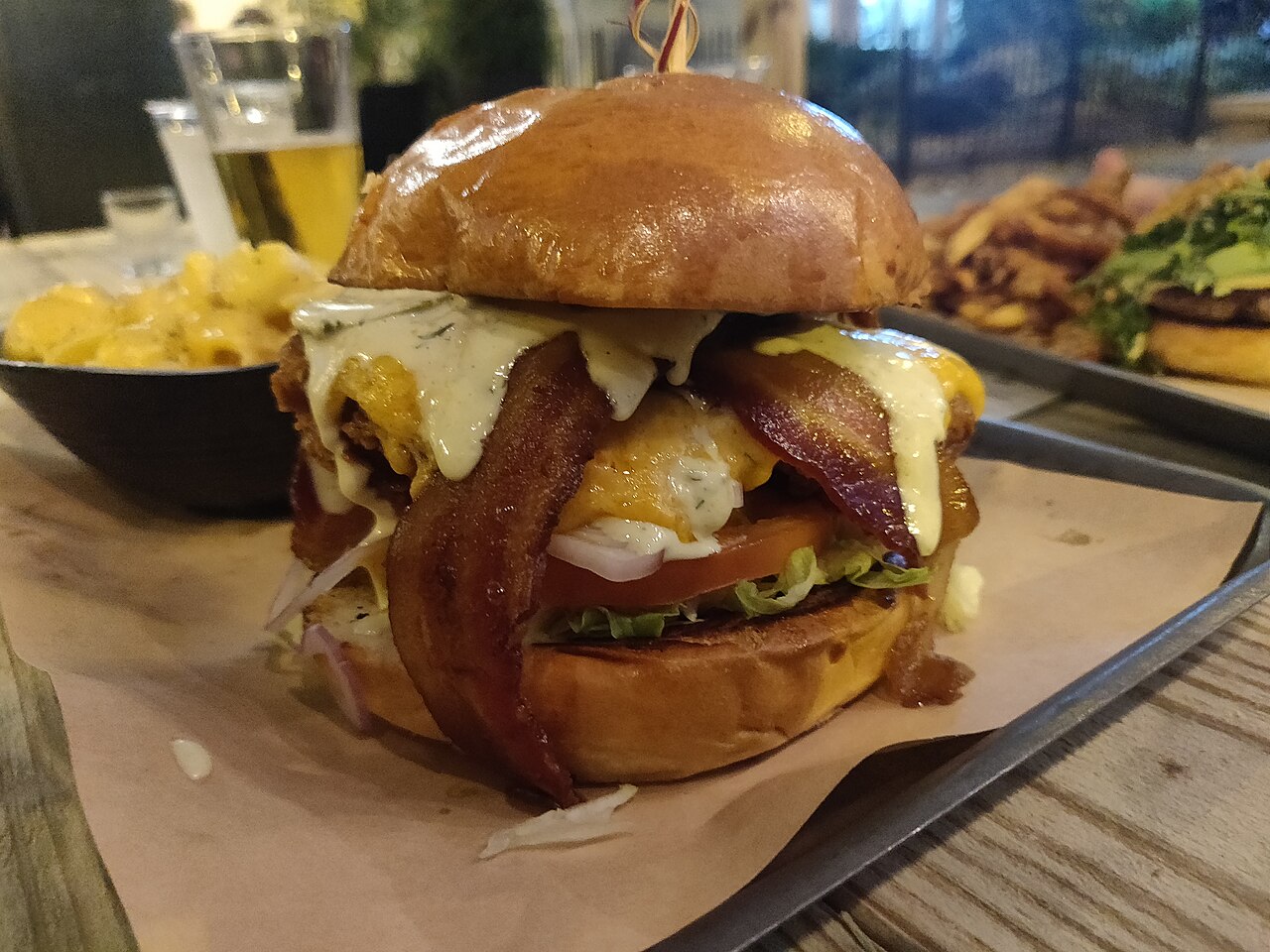
The useful choices happen before assembly: use moderately fatty ground beef, shape without squeezing and prepare the cold toppings before the patties enter the pan. This is a thick-patty home method, not a smash-burger technique.
A Better Skillet Cheeseburger
Planning totals add preparation, cooking and listed waits. Overlapping stages may shorten the schedule; ingredient and equipment differences can lengthen it.
Ingredients
Times and base yield refer to the original recipe. Scaling quantities does not automatically change pan size, temperature or cooking time.
Step-by-step method
The steps describe the base batch (4 servings). The calculator changes the ingredient list only; amounts written in the steps, equipment and timing remain for that base batch.
Step 1
Mix mayonnaise, ketchup and mustard for a simple sauce and prepare all cold toppings.
Step 2
Divide beef into four loose balls and shape gently into patties slightly wider than the buns.
Step 3
Heat a heavy skillet well. Divide the listed salt and black pepper over the patty exteriors just before cooking.
Step 4
Sear without pressing repeatedly, turn once and continue until the center reaches 71°C / 160°F.
Step 5
Add cheese near the end and toast the cut sides of the buns separately.
Step 6
Assemble with sauce, lettuce, tomato and onion and serve immediately.
Why this version works
Why the 600 g beef is divided into four patties
Four portions of roughly 150 g are substantial enough to remain tender without creating a very thick center that takes a long time to cook. Shape each slightly wider than its bun because beef contracts as it cooks. Press the middle only a little thinner if the patties tend to dome. Do not knead the meat to distribute seasoning: tightly worked mince has a springier, more compact bite. Salt the exterior shortly before searing and keep the shaped patties cold until the pan is ready.
Choose a pan that has room to recover
A heavy skillet stores heat, but it still cools when cold beef is added. In a typical home pan, two patties at a time are easier to brown than four crowded ones. Watch the liquid around the meat: a little rendered fat is expected, while a broad pool of gray juices indicates the surface is steaming. Leave the first side undisturbed long enough to form a crust, then slide the spatula fully underneath. Pressing repeatedly squeezes out moisture without making the center cook more evenly.
Balance melting cheese with a fully cooked center
Lay a thin cheese slice over the patty near the end, once the beef is close to its required final temperature. If it needs help melting, cover the skillet briefly rather than continuing an unnecessary long cook. Ground beef should reach 71°C / 160°F in the thickest point; pinkness or clear juices are not dependable substitutes for measurement. Insert the thermometer from the side if that makes the center easier to locate. A browned outside alone cannot tell you what happened inside.
Build a bun that survives the last bite
Toast only the cut faces of the buns so the outside stays soft while the inside gains a little resistance to moisture. Dry lettuce and tomato after washing, use moderate sauce and avoid a thick stack of slippery slices. Lettuce beneath the patty can help separate the bun from some juices, but it will not rescue an overloaded sandwich. Keep extra sauce at the table. Choose toppings for their contrast—cool crunch, acidity and sweetness—rather than assuming every available topping improves the burger.
Useful variations without changing the method blindly
Monterey Jack, mild Cheddar and processed melting slices give different levels of sharpness and smoothness. A very dry aged cheese may not melt into the same flexible layer. Turkey or chicken mince is a different recipe decision, not a direct safety-equivalent swap; poultry needs 74°C / 165°F and often needs additional help with moisture. For this beef version, onion and pickles can add brightness without needing a sweeter sauce. Keep the first attempt simple so you can judge the patty itself.
Choose topping thickness before stacking the burger
Four buns and four patties do not guarantee that every combination of vegetables will fit comfortably. Slice the tomato and onion so they add contrast without forming a tall slippery layer, and dry washed lettuce before assembly. Mix the measured sauce first, then apply a modest amount to the bun faces rather than pouring it directly onto the hot cheese. Taste a complete bite before putting extra mustard on every burger. If the patty is especially juicy, assemble only when it will be eaten instead of making a row of finished sandwiches to hold.
Ingredient choices and substitutions
Choose freshly ground beef with a known fat level and keep it cold. A soft but structured bun should hold the filling without dominating it. Cheese should melt easily and be sliced thin enough to soften quickly.
Fixes for this recipe
| What you notice | Likely reason | What to do |
|---|---|---|
| The patty is dark but the center is not ready | The pan was too hot for the patty thickness. | Lower the heat and finish gently, checking the center. Next time keep patties evenly thick rather than raising the heat to force speed. |
| The burger falls apart during turning | It was moved before the crust set or the spatula supported only one edge. | Let the first side firm, then lift the entire patty with a broad spatula. Avoid adding an egg or breadcrumbs automatically; those change it toward a meatloaf texture. |
| The bun turns wet immediately | Wet vegetables, excess sauce or a long assembled hold. | Drain and dry toppings, toast the bun faces and assemble immediately before eating. Keep extra sauce separate. |
Recipe-specific questions
Should I salt the ground beef before shaping?
For this loose-textured burger, season the outside just before cooking. Mixing salt thoroughly into the mince and leaving it can make the texture firmer and springier. If you prefer a tightly bound seasoned patty, recognize that it is a different style rather than a necessary improvement.
Can I cook all four burgers at once?
Only if the cooking surface is large enough to leave useful space between them. Most ordinary skillets perform better with two. Keep raw and cooked plates separate, and prepare the buns in advance so the first pair does not wait through a long assembly job.
Is the center color a safe doneness guide?
No. Ground beef can look brown before reaching a safe temperature, or retain pinkness after doing so. Measure 71°C / 160°F at the thickest center. This recipe does not recommend choosing ground-beef doneness by exterior appearance alone.
Serving and storage
A vinegar-dressed cabbage salad brings crunch and acidity without competing with the beef. If serving potatoes, keep the sauce restrained so the plate does not become uniformly rich.
Store cooked patties separately from buns and vegetables, refrigerating promptly. Reheat the meat thoroughly before rebuilding the sandwich; lettuce and tomato should be added fresh. A fully assembled burger deteriorates quickly because its warm juices migrate into the bread.
An AI-assisted editorial guide, not independently kitchen-tested. The photograph is a serving example. How we prepare and correct our guides.
For safe handling, consult FDA guidance. Send recipe corrections by email to ZYS10.