The buttermilk and bicarbonate react as soon as they meet, while baking powder provides additional lift. This recipe is designed for small thick pancakes; thinning it dramatically creates a different breakfast rather than a better version of the same one.
Fluffy Buttermilk Pancakes
Includes 5 minutes batter resting; cooking is an estimate for successive small batches.
Planning totals add preparation, cooking and listed waits. Overlapping stages may shorten the schedule; ingredient and equipment differences can lengthen it.
Ingredients
For fractional eggs, beat an extra egg or yolk and measure the required fraction.
Times and base yield refer to the original recipe. Scaling quantities does not automatically change pan size, temperature or cooking time.
Step-by-step method
The steps describe the base batch (4 servings). The calculator changes the ingredient list only; amounts written in the steps, equipment and timing remain for that base batch.
Step 1
Whisk flour, sugar, baking powder, bicarbonate and salt in a large bowl.
Step 2
Whisk buttermilk, eggs and cooled melted butter separately.
Step 3
Fold wet ingredients into dry just until no large dry pockets remain, leaving small lumps.
Step 4
Rest for 5 minutes. During that time heat a skillet over medium heat, using the listed tablespoon oil sparingly across the batches.
Step 5
Spoon batter into small rounds and cook until edges look set and bubbles remain open.
Step 6
Turn once and finish the second side briefly, serving in small warm stacks.
Why this version works
Read the batter before adding extra milk
The measured 350 ml buttermilk should produce a batter that drops in a thick ribbon and spreads gradually. Buttermilk brands vary in thickness, so a small adjustment may be reasonable after the short rest. Add a tablespoon at a time only if the batter remains too stiff to spread. A very thin batter cannot trap the same height of bubbles. Do not chase perfect smoothness: small lumps of hydrated flour are less harmful than extended beating that makes the pancakes tough.
Use two leaveners for different parts of the job
Bicarbonate responds to acidic buttermilk and helps browning, while baking powder supplies lift according to its formulation. They are not interchangeable teaspoon for teaspoon. Too much bicarbonate can leave an unpleasant alkaline taste and exaggerated dark color. If either product is old, check the package date and storage before assuming the flour or skillet is at fault. Measure level teaspoons rather than adding a generous heap to make the pancakes taller.
The five-minute rest is enough for this method
Brief resting lets the flour take up liquid and makes the batter more uniform without a long delay. Have the skillet warming during that interval. Leaving a chemically leavened batter for hours wastes some early reaction and changes its consistency. If breakfast needs advance preparation, mix the dry ingredients separately and keep the wet ingredients chilled, then combine near cooking. Do not leave egg-and-dairy batter on a warm counter while doing other jobs.
Use surface cues to time the first turn
On a moderately hot lightly greased pan, the bottom should become golden as the top edges lose their wet shine. Bubbles that appear and remain open indicate the surface is setting. A center that stays glossy while the underside blackens means the pan is too hot. Turn once with a confident supported lift and let the second side finish. Pressing with the spatula expels gas and compresses the very structure you were trying to preserve.
Keep the serving stack from steaming itself soft
A wire rack in a low oven is useful for a short hold because air can circulate around the pancakes. A large tight stack under foil traps moisture and makes the surfaces damp. Serve in smaller batches where possible, particularly if everyone likes a lightly crisp edge. Fruit and syrup belong on the plate near eating rather than on the entire holding batch. This also keeps sweetness adjustable and prevents the lowest pancakes from absorbing a puddle.
Use one ladle size to connect yield and cooking time
Four servings do not imply four giant pancakes. Choose small rounds that leave room for a spatula, then keep the batter portion consistent across the batch. A large first pancake and tiny final ones make surface bubbles a less useful comparison because their centers have different distances to heat through. Use the measured pan oil lightly between batches rather than letting the last rounds fry in accumulated fat. Serve early pancakes from a rack or make successive plates, keeping fruit and syrup separate until the pancakes reach the table.
Ingredient choices and substitutions
Use cultured buttermilk and fresh leavening. Plain yogurt thinned with milk is a practical variation with a different consistency. Plain flour is more suitable than strong bread flour for a tender crumb.
Fixes for this recipe
| What you notice | Likely reason | What to do |
|---|---|---|
| The pancakes are flat and chewy | The batter was overmixed, too thin or made with tired leavening. | Stop mixing as soon as large dry pockets disappear and check the leaveners. Make one test pancake before thinning the whole bowl further. |
| The outside is dark and the center gummy | The skillet is too hot or the portions too large. | Lower the heat and make smaller rounds. Allow the first side to set before turning instead of repeatedly flipping to hide the color. |
| The batter barely spreads | Very thick buttermilk or flour measured too generously. | After the short rest, add buttermilk a tablespoon at a time until a ladleful spreads slowly. Weigh flour rather than packing a cup. |
Recipe-specific questions
Can I use yogurt instead of buttermilk?
Plain unsweetened yogurt thinned with milk can work as a home variation. Start with a consistency similar to pourable cultured buttermilk. Very thick yogurt changes hydration, while sweetened flavored yogurt changes both sugar and flavor, so neither is a neutral direct replacement.
Should I mix the batter completely smooth?
No. A few small lumps are expected. The goal is to remove large pockets of dry flour while keeping gluten development modest. If you are still whisking to remove every speck, the pancakes may become tougher even though the bowl looks neater.
Can I make one enormous pancake?
A large round is harder to turn and may brown before the middle sets. This recipe is easier to judge as several modest pancakes. If changing size, reduce heat as needed and check the center rather than preserving the same short cooking interval.
Serving and storage
Fresh berries, sliced banana or a tangy plain yogurt supply contrast. Add syrup individually rather than soaking the whole stack before serving.
Cool spare pancakes on a rack, refrigerate promptly or freeze separated with baking paper. Reheat only the amount needed in a toaster or oven until thoroughly hot. Keep fruit and sauces separate during storage so the pancakes do not absorb extra moisture.
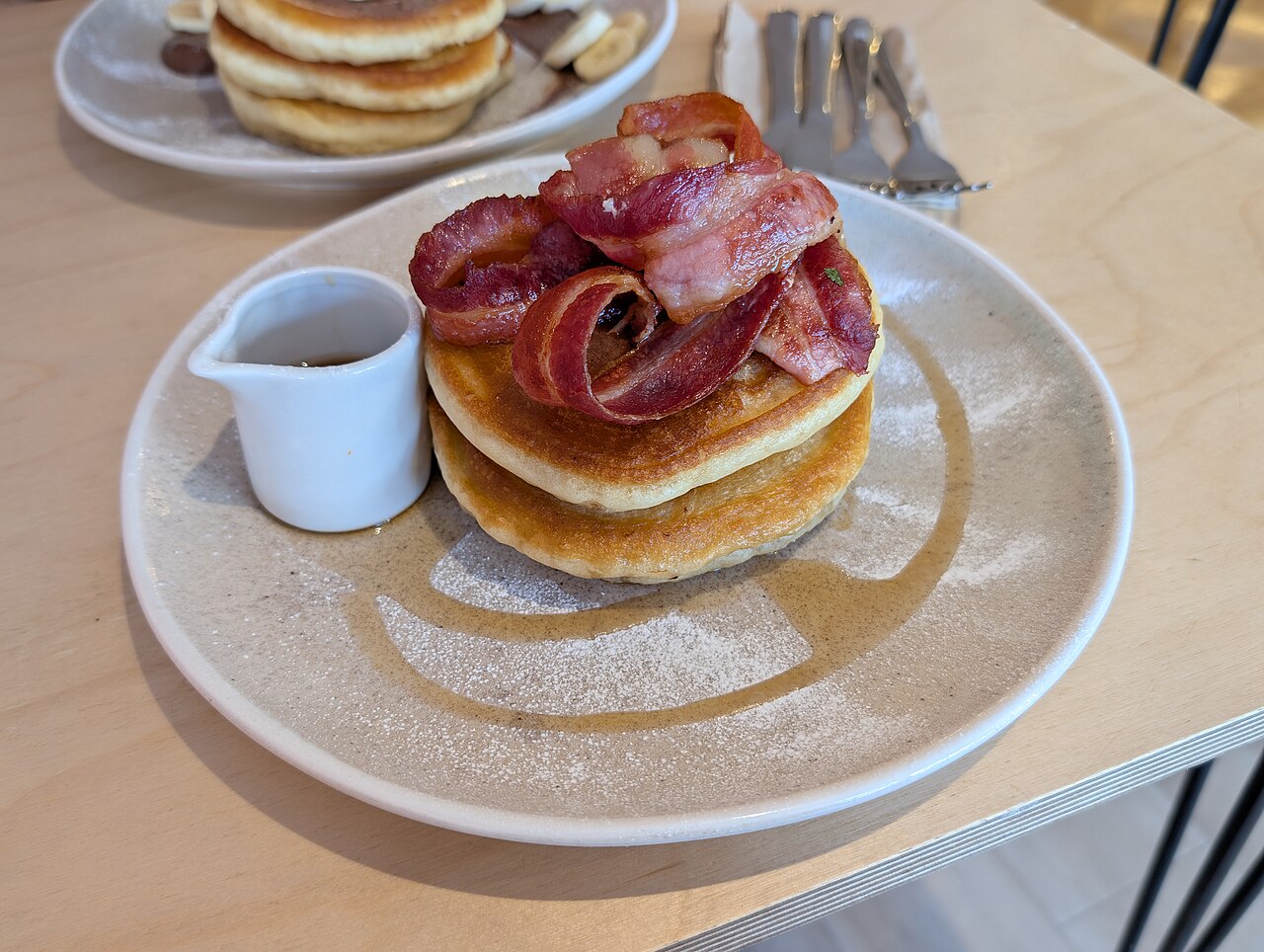
An AI-assisted editorial guide, not independently kitchen-tested. The photograph is a serving example. How we prepare and correct our guides.
For safe handling, consult FDA guidance. Send recipe corrections by email to ZYS10.