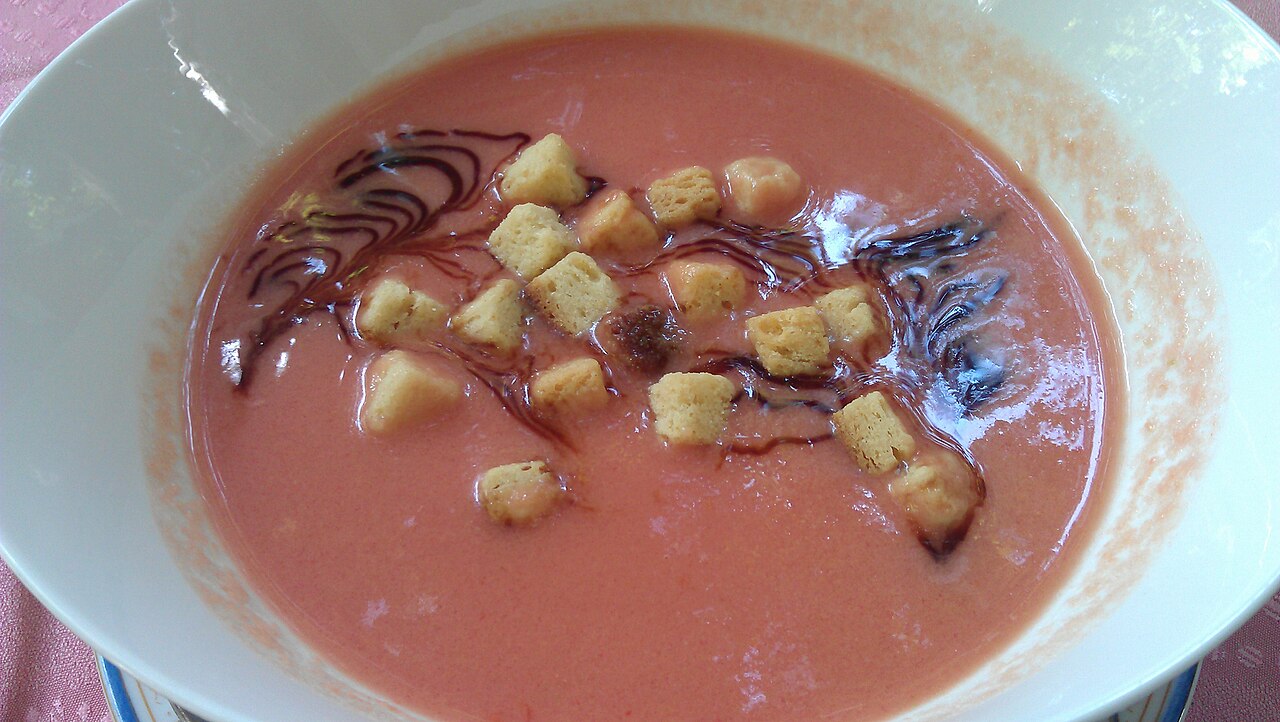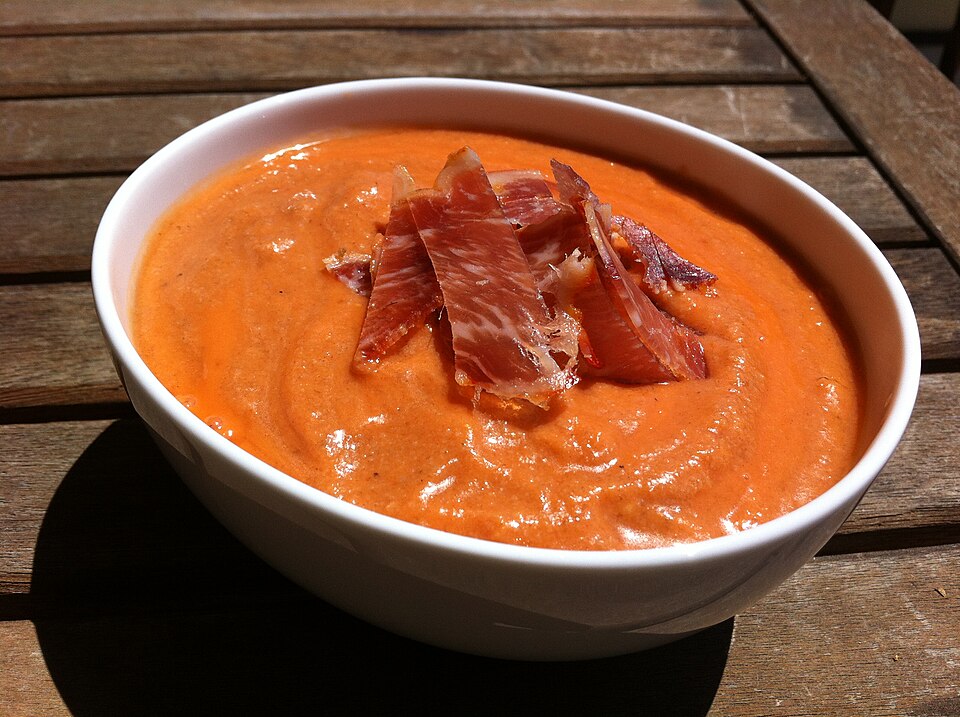
Its texture depends on letting the bread hydrate before blending and adding oil in a controlled stream. Choose excellent tomatoes, then keep the garnish small enough that the soup remains the focus.
Silky Córdoba-Style Salmorejo
Plus bread soaking and at least 2 hours chilling
Planning totals add preparation, cooking and listed waits. Overlapping stages may shorten the schedule; ingredient and equipment differences can lengthen it.
Ingredients
For fractional eggs, beat an extra egg or yolk and measure the required fraction.
Times and base yield refer to the original recipe. Scaling quantities does not automatically change pan size, temperature or cooking time.
Step-by-step method
The steps describe the base batch (4 servings). The calculator changes the ingredient list only; amounts written in the steps, equipment and timing remain for that base batch.
Step 1
Roughly chop tomatoes and blend until smooth, then pass through a sieve to remove skin and seeds.
Step 2
Tear bread into pieces and soak it in the tomato puree for 10 minutes.
Step 3
Add garlic and salt and blend thoroughly until no bread pieces remain.
Step 4
With the blender running slowly, drizzle in olive oil until the soup becomes thick and silky.
Step 5
Taste before adding optional vinegar, then refrigerate for at least 2 hours.
Step 6
Serve cold in small bowls with chopped hard-boiled egg and optional ham.
Why this version works
Understand the tomato-bread ratio before substituting
The kilogram of ripe tomatoes supplies both flavor and most of the liquid for 150 grams of bread. Use a substantial white crumb with the crust removed so it hydrates and blends evenly. Very airy bread or a dense seeded loaf changes the balance, while strongly flavored sourdough introduces extra acidity. Stale means dry enough to need soaking, not moldy or rancid. If the tomatoes are unusually fleshy, the mixture may need a little added cold liquid; if watery, begin with no extra water. The target is a creamy puree that stays on a spoon rather than a thin drink.
Sieve tomato before the bread goes in
Blend the chopped tomatoes first, then pass the puree through a sieve if skins and seeds remain noticeable. Doing this before adding bread avoids discarding a large amount of the thickened final mixture. Pour the smooth tomato over torn bread and give it time to soften fully. A dry center in a thick bread chunk can remain grainy even after a hurried blend. Tear pieces small enough to hydrate evenly and press them beneath the tomato. The soak is functional rather than decorative waiting, so allow longer if the bread still feels firm when squeezed with a spoon.
Add olive oil for a cohesive texture
The 100 milliliters of olive oil are a central ingredient, not merely a garnish. Choose an oil whose bitterness and pepperiness you enjoy, since a very assertive one can dominate raw tomatoes. Start blending the hydrated bread, tomato, small garlic clove and salt, then drizzle oil gradually so it disperses throughout the puree. A high-powered blender may make the mixture warm; work in manageable intervals and chill afterward rather than treating machine heat as cooking. The final color can become lighter as oil disperses, which is different from diluting the soup with cream.
Let the tomatoes decide whether vinegar is needed
Some ripe tomatoes already supply enough acidity, while others benefit from a small amount of sherry vinegar. Taste before adding the optional tablespoon and again after the soup chills. Garlic also develops during the rest, so do not multiply the clove count merely because the warm sample seems mild. Hard-boiled egg and optional ham add texture and salt at serving; season the base with those additions in mind. Finely dice garnish so it sits as a small accent, not a large cold mound. This version uses fully cooked egg and treats ham as optional rather than indispensable.
Check the sieved tomato yield before adding bread
The recipe starts with a kilogram of whole tomatoes, but the usable puree after sieving varies with seeds, skin and ripeness. Notice that yield before adding the full bread allowance, especially when the tomatoes are firm or unusually seedy. Let torn bread hydrate in the puree before deciding it needs more liquid. A substantial crumb with the crust removed behaves differently from airy bread that disappears immediately. The chopped egg and optional ham belong on top; blending them into the soup changes both its texture and the way each spoonful is seasoned.
Ingredient choices and substitutions
Choose very ripe fragrant tomatoes and white bread with a substantial crumb. A fruity olive oil is noticeable here, so taste it first. Strongly bitter oil can overwhelm the sweet tomato. Use fully hard-boiled eggs for the garnish.
Fixes for this recipe
| What you notice | Likely reason | What to do |
|---|---|---|
| The soup feels gritty instead of silky. | Bread was not fully hydrated or tomato skins remained. | Give the bread more soaking time and blend thoroughly. Strain tomato before combining next time so you do not need to force an already thick bread mixture through a sieve. |
| Oil seems separate on the surface. | It entered too quickly or the mixture was not blended sufficiently. | Blend again briefly and add any remaining oil slowly. Stir after chilling if slight natural separation appears, but avoid adding more oil simply to hide an unbalanced texture. |
| The flavor is sharply acidic or garlicky. | Vinegar or raw garlic was added without considering tomato character and chilling. | Dilute with more tomato-bread base if available. For future batches, reserve vinegar and begin with the small garlic quantity listed. |
Recipe-specific questions
Is salmorejo just a thicker gazpacho?
They overlap in ingredients but have different structures in these recipes. This salmorejo centers on tomato, bread and olive oil without cucumber or pepper; the gazpacho is lighter and includes those vegetables.
Can I make a gluten-free version?
A suitable plain gluten-free bread may work, but hydration and thickening vary greatly between products. Start cautiously and judge the chilled texture. Omitting bread entirely makes a different tomato puree rather than an equivalent substitution.
Can I omit both egg and ham?
Yes. The tomato-bread-oil base remains the dish's main structure. Offer a small vegetable garnish or a final drop of olive oil instead, and adjust salt without relying on cured ham.
Serving and storage
Use modest starter portions with a simple vegetable or bean plate. Because bread already thickens the soup, an enormous bread accompaniment is unnecessary, though a small crisp toast can add contrast.
Keep the soup covered and refrigerated, with egg and ham stored separately. Stir gently before serving and add garnish only to the portion being eaten. Serve in smaller chilled batches on a warm day rather than repeatedly leaving a large bowl at room temperature.
An AI-assisted editorial guide, not independently kitchen-tested. The photograph is a serving example. How we prepare and correct our guides.
For safe handling, consult FDA guidance. Send recipe corrections by email to ZYS10.